Retail in Kuwait is entering a phase where speed, accuracy, and data visibility are no longer optional. Stores that rely only on traditional billing counters are facing longer queues, higher staffing pressure, and inconsistent customer experiences.
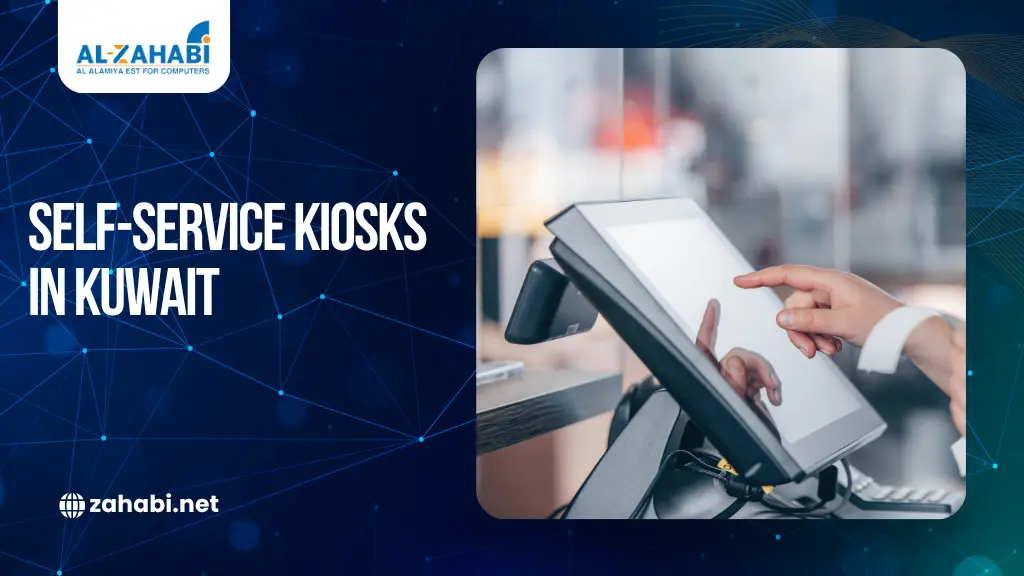
This shift has led to a rapid rise in the adoption of the self-service kiosk in Kuwait, especially across supermarkets, convenience stores, and large-format retail chains.
Rather than being a short-term trend, self-service kiosks are becoming part of a broader operational strategy that combines automation, POS systems, and real-time data tracking. This article explains how these systems work, what they cost, and why they deliver measurable returns.
What Is a Self-Service Kiosk in Retail?
A retail self-service kiosk is a customer-operated system that allows shoppers to complete transactions independently. It replaces or complements traditional checkout counters by enabling:
- Product scanning through barcode readers
- Automated price calculation
- Digital payment processing
- Receipt generation
- Real-time transaction recording
A modern self-checkout kiosk system is connected to POS software, inventory systems, and reporting tools, forming part of a larger retail POS system that keeps transactions and data synchronized.
Why Retailers in Kuwait Are Adopting Kiosks?
Faster Checkout and Operational Flow
In high-traffic retail environments, billing counters often become bottlenecks. Self-service kiosks distribute the checkout load, allowing multiple customers to complete transactions simultaneously.
This reduces waiting time and improves overall store flow, particularly during peak hours.
Staff Optimization, Not Replacement
Retailers are using kiosks to reallocate staff rather than eliminate roles.
With a POS kiosk system, employees can shift from repetitive billing tasks to higher-value activities such as:
- Customer assistance
- Store merchandising
- Inventory management
This improves service quality while maintaining operational efficiency.
Improved Accuracy and Reduced Errors
Manual billing increases the risk of pricing errors and incorrect entries.
A kiosk machine for retail ensures:
- Accurate barcode-based billing
- Automatic tax calculation
- Consistent pricing across transactions
This reduces discrepancies in both customer billing and inventory records.
Support for Retail Automation
Self-service kiosks are a key part of retail automation in Kuwait.
When integrated with POS and inventory systems, they enable:
- Real-time stock updates
- Automated sales tracking
- Accurate reporting across locations
This level of automation helps retailers operate more efficiently at scale.
Key Features of Modern Self-Checkout Systems
A typical self-checkout kiosk system includes:
- Barcode scanner for product identification
- Touchscreen interface for customer interaction
- Integrated payment system supporting cards and contactless payments
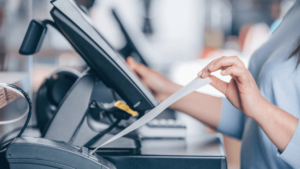
- Thermal receipt printer for fast and reliable transaction output
- POS system integration
Advanced systems may also include:
- Loyalty program integration
- Multi-language support
- Centralized reporting dashboards
These features ensure both operational efficiency and ease of use for customers.
Cost of Installing Self-Service Kiosks in Kuwait
Retailers should evaluate costs as part of a long-term operational investment.
Initial Investment
- Kiosk hardware and peripherals
- POS software integration
- Installation and configuration aligned with the existing POS hardware setup to ensure compatibility and smooth deployment
Ongoing Costs
- Maintenance and servicing
- Software updates
- Payment gateway charges
Operational Considerations
- Staff training
- Store layout adjustments
- System upgrades over time
While initial costs may appear high, they are offset by long-term efficiency gains and reduced operational friction.
ROI: How Kiosks Deliver Measurable Value
Retailers often evaluate kiosks as a cost, but their real impact is seen in operational efficiency, revenue growth, and long-term scalability. When implemented correctly, kiosks influence multiple performance areas at once.
Faster Transactions and Higher Throughput
One of the most immediate returns from implementing a self-checkout kiosk system is the increase in transaction speed. Unlike traditional counters, where one cashier serves one customer at a time, kiosks allow multiple customers to check out simultaneously.
In high-traffic retail environments, even a small reduction in checkout time per customer can significantly impact daily revenue. For example, if average billing time drops by even 20–30 seconds per transaction, the store can serve a higher number of customers during peak hours.
This results in:
- Increased sales during busy periods
- Reduced cart abandonment due to long queues
- Better utilization of store space and checkout zones
- Over time, improved throughput directly contributes to higher revenue without increasing physical infrastructure.
Reduced Operational Costs Through Staff Optimization
Kiosks do not eliminate the need for staff, but they change how staff is used. Instead of assigning multiple employees to billing counters, retailers can operate fewer staffed counters alongside self-service kiosks.
This allows businesses to:
- Reduce dependency on large billing teams
- Reallocate staff to customer service and sales support
- Maintain operational efficiency during peak and off-peak hours
In practical terms, a store that previously required four to five billing counters may operate efficiently with fewer staffed counters supported by kiosks.
For growing retail chains, this translates into long-term cost control, especially as they expand to multiple locations.
Improved Data Accuracy and Inventory Reliability
Manual billing processes often introduce errors, including incorrect pricing, missed scans, or inconsistent data entry. These small inaccuracies can accumulate and affect inventory records, reporting, and financial tracking.
A kiosk machine for retail uses automated barcode scanning for POS integration to ensure that:
- Every scanned item is recorded accurately
- Pricing is consistent across all transactions
- Inventory is updated in real time
Accurate data improves:
- Stock management and replenishment planning
- Sales reporting and forecasting
- Overall operational visibility
This level of reliability is essential for retailers managing large product volumes or multiple store locations.
Enhanced Customer Experience and Retention
Customer experience plays a direct role in repeat business. Long queues and slow billing are among the most common reasons for dissatisfaction in retail environments.
Self-service kiosks address this by giving customers more control over their transactions. Shoppers can:
- Complete purchases at their own pace
- Avoid waiting in long lines
- Experience faster and more predictable service
- For certain customer segments, especially those making small or quick purchases, self-checkout becomes the preferred option.
Over time, this leads to:
- Higher customer satisfaction
- Increased likelihood of repeat visits
- Positive perception of the store as efficient and modern
Better Data Insights for Business Decisions
Beyond immediate operational gains, kiosks generate detailed transaction-level data that supports better decision-making.
Retailers can analyze:
- Purchase patterns and peak shopping hours
- Product performance and demand trends
- Customer behavior across different store locations
This data helps businesses:
- Optimize product placement
- Adjust pricing strategies
- Plan promotions more effectively
When combined with POS and inventory systems, kiosks become a valuable source of business intelligence, not just a checkout tool.
Long-Term Scalability and Consistency
As retailers expand, maintaining consistent operations across multiple stores becomes challenging. Kiosks help standardize checkout processes and data collection across locations.
This ensures:
- Uniform customer experience
- Consistent billing accuracy
- Centralized reporting across stores
For businesses planning growth, this consistency is a critical component of long-term ROI.
Insightful Comparison: Traditional Checkout vs Self-Service Kiosks
| Factor | Traditional Checkout | Self-Service Kiosks |
| Checkout Speed | Slower during peak hours | Faster with distributed load |
| Staffing Requirement | High | Moderate |
| Error Rate | Dependent on staff | Lower due to automation |
| Customer Control | Limited | High |
| Scalability | Requires more counters | Easily scalable |
| Data Capture | Basic | Detailed and real-time |
| Operational Cost | Higher over time | Optimized long-term |
Real-World Use Cases in Kuwait Retail
Supermarkets
Supermarkets in Kuwait handle high customer volumes, especially during evenings, weekends, and seasonal peaks such as Ramadan or holiday sales. Traditional checkout counters often struggle to manage this surge, leading to long queues and slower service.
Self-service kiosks help distribute checkout traffic across multiple points, allowing customers with fewer items to complete transactions quickly. This reduces pressure on staffed counters and improves overall store flow.
In large supermarket environments, kiosks also support:
- Faster throughput during peak hours
- Reduced queue congestion at billing counters
- Better handling of bulk vs small basket customers
- Real-time inventory updates through integrated scanning
Over time, supermarkets benefit from improved customer satisfaction and more efficient use of floor space.
Convenience Stores
Convenience stores operate on speed and accessibility. Customers typically visit for quick purchases such as snacks, beverages, or essential items, and expect minimal waiting time.
A self-checkout kiosk system aligns well with this behavior by enabling rapid transactions without requiring staff intervention for every purchase.
In these environments, kiosks help:
- Reduce checkout time for small purchases
- Handle rush hours with limited staff
- Maintain consistent service during late hours or shifts
- Improve efficiency in compact store layouts
Because convenience stores often operate with smaller teams, kiosks act as an extension of staff capacity rather than a replacement.
Fashion and Apparel Retail
Fashion retail has different operational needs compared to supermarkets. Customers often browse, compare products, and may require price checks or size availability before making a purchase.
Self-service kiosks in fashion stores are used not only for billing but also for assisted shopping functions such as:
- Checking product prices and promotions
- Verifying stock availability across sizes or variants
- Accessing product information without staff assistance
- Enabling faster checkout after decision-making
In high-end or busy retail outlets, kiosks help reduce billing queues while allowing staff to focus on customer engagement and styling assistance.
They also contribute to better inventory visibility, especially when integrated with backend systems.
Electronics and Specialty Retail
Stores selling electronics or high-value items use kiosks differently. Instead of only focusing on checkout, kiosks often serve as information points.
They help customers:
- Compare product specifications
- Check availability in-store or across locations
- Access pricing details instantly
This reduces dependency on staff for basic queries and allows employees to focus on more complex customer interactions.
Pharmacies and Healthcare Retail
In pharmacy chains and healthcare retail environments, accuracy and speed are critical. Kiosks can assist with:
- Quick billing for over-the-counter products
- Prescription pickup workflows
- Reducing queues during peak hours
- When integrated with backend systems, kiosks can also help ensure accurate product identification and pricing.
Multi-Store Retail Chains
For larger retail groups operating across multiple locations in Kuwait, kiosks support standardization.
They help ensure:
- Consistent billing experience across stores
- Centralized data collection
- Uniform pricing and product information
- Scalable operations as new branches are added
- This makes kiosks an important part of long-term retail expansion strategies.
How Self-Service Kiosks Integrate with POS and Retail Systems?
For kiosks to deliver consistent performance, they must operate as part of a connected retail ecosystem rather than as standalone devices. Integration ensures that every transaction, scan, and payment is reflected across all business systems in real time.
Kiosks are most effective when integrated with:
- POS systems
- Inventory management software
- Payment gateways
A well-integrated setup allows the kiosk to pull accurate product data, apply correct pricing, and process transactions without manual intervention. Once a purchase is completed, the system automatically updates inventory levels and records the transaction in sales reports.
This level of integration enables:
- Real-time inventory visibility across all sales channels
- Accurate pricing and promotion application
- Centralized reporting for better decision-making
- Reduced discrepancies between physical stock and system records
- For multi-store retailers, integration becomes even more critical. It ensures that data from all locations is synchronized, allowing businesses to maintain consistency in pricing, stock levels, and customer experience.
Without proper integration, kiosks may function in isolation, leading to delays, data mismatches, and operational inefficiencies.
Role of ID and Access Systems in Retail Operations
As retail environments adopt more automated systems, controlling staff access to devices and operational areas becomes essential for both security and efficiency.
Retailers use identification systems to ensure that only authorized personnel can access POS terminals, kiosk controls, and backend systems.
Common solutions include:
- PVC ID cards for employee identification
- ID card printer systems for on-site card production
- ID badge printing machine setups for quick issuance or replacement
- Office ID card system integration for managing access levels
These systems are particularly important in environments where multiple employees interact with shared devices such as kiosks and POS terminals. Controlled access helps prevent unauthorized system changes, reduces the risk of internal errors, and improves accountability.
Durable materials such as Zebra PVC cards are often used for long-term use, especially in high-traffic retail environments where cards are used frequently.
In larger retail chains, ID systems can also be linked with access control software, allowing businesses to define permissions based on roles. For example, store managers may have access to reporting systems, while floor staff may only access transaction-level functions.
This structured approach improves operational security while supporting smooth day-to-day retail operations.
Challenges to Consider Before Implementation
While self-service kiosks offer clear operational benefits, retailers should account for a few practical challenges to ensure smooth adoption and long-term performance.
Customer Adaptation
Some customers may not be familiar with self-service kiosks initially, especially first-time users. Retailers should provide staff assistance during early adoption to guide users and ensure a smooth experience. Over time, familiarity increases and dependence on support reduces.
Maintenance Requirements
Self-service kiosks require regular maintenance to function reliably. This includes checking hardware components, updating software, and ensuring printers and scanners work without errors. Preventive maintenance helps avoid unexpected downtime during peak business hours.
Security and Monitoring
Retailers must ensure secure payment processing through encrypted systems and reliable payment gateways. In addition, monitoring tools should be in place to detect unusual activity or misuse. Strong security practices protect both customer data and business operations.
How to Choose the Right Kiosk Setup
- Evaluate store size and customer volume
- Ensure POS compatibility
- Consider payment options
- Plan for scalability
- Choose reliable support services
Conclusion
The rise of the self-service kiosk in Kuwait reflects a shift toward efficient, data-driven retail operations.
By combining POS systems, automation, and real-time insights, kiosks help retailers improve speed, accuracy, and customer experience. With the right setup, they offer measurable returns and support long-term growth in an increasingly competitive retail landscape.
FAQs
What is a self-service kiosk in retail, and how does it work?
A self-service kiosk allows customers to scan products, make payments, and complete transactions independently. It integrates with POS systems in Kuwait to update inventory and sales data in real time.
Why are retailers in Kuwait adopting self-checkout kiosk systems?
They help reduce queues, improve efficiency, and support automation while meeting customer expectations for faster service.
What are the benefits of a kiosk machine for retail?
Faster checkout, improved accuracy, better staff utilization, and real-time data tracking.
How much does a self-service kiosk in Kuwait cost?
Costs depend on system configuration, but long-term savings from efficiency often offset the initial investment.
What is the ROI of a POS kiosk system?
ROI comes from faster transactions, reduced staffing needs, improved accuracy, and enhanced customer experience.
How does retail automation in Kuwait improve operations?
It enables real-time tracking, reduces manual errors, and improves decision-making through accurate data.
Are self-service kiosks secure?
Yes, modern systems use secure payment processing and monitoring tools to ensure safe transactions.
How do kiosks integrate with retail systems?
They connect with POS and inventory systems to synchronize sales, stock, and reporting data.


 by
by