
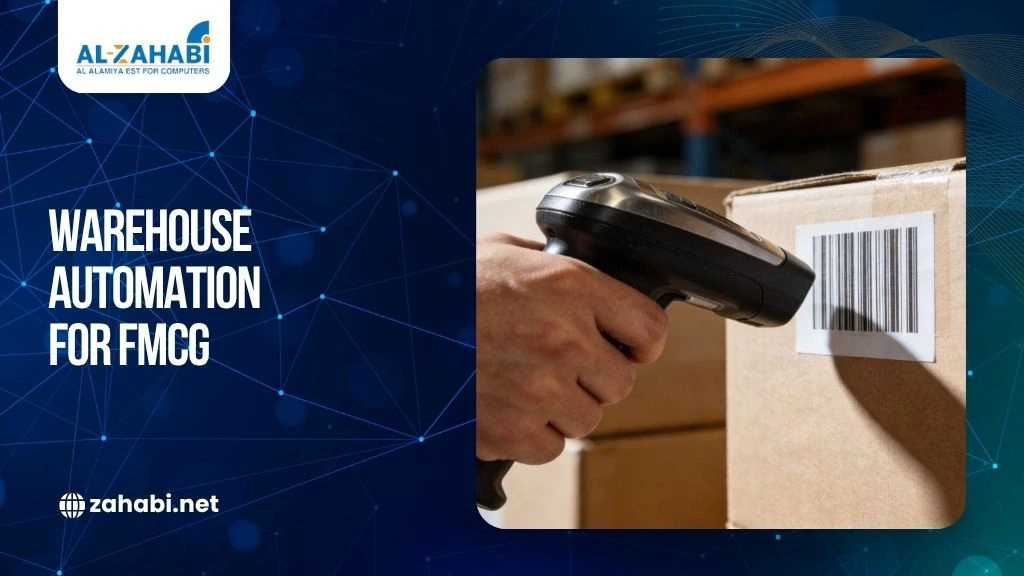
Fast-moving consumer goods (FMCG) businesses operate in one of the most demanding supply chain environments. Products move quickly, inventory changes constantly, and customers expect accurate, on-time deliveries. Managing these operations manually often leads to stock discrepancies, delayed order fulfilment, and higher labour costs. As warehouses handle larger product volumes, traditional processes become increasingly difficult to manage.
This is why warehouse automation Kuwait is becoming a priority for FMCG businesses looking to improve operational efficiency. Modern warehouse automation combines barcode technology, RFID systems, mobile computers, and inventory software to simplify inventory tracking and streamline daily operations. Instead of replacing people, automation helps warehouse teams work faster and with fewer errors.
Whether you manage a wholesale warehouse, distribution centre, or retail supply chain, understanding warehouse automation can help your business improve productivity while preparing for future growth.
Key Takeaways:
- Warehouse automation improves inventory accuracy and operational efficiency.
- Barcode and RFID technologies reduce manual warehouse tasks.
- Mobile devices provide real-time inventory visibility.
- Automation helps FMCG businesses fulfil orders faster.
- Smart warehouse solutions support long-term business growth.
Why Warehouse Automation Matters for FMCG Businesses
FMCG businesses operate differently from many other industries. Products have high turnover rates, inventory moves rapidly, and delivery timelines are often tight.
Managing these operations manually becomes increasingly difficult as product volumes grow. Warehouse employees may spend hours locating inventory, updating stock records, or performing manual inventory counts. These repetitive tasks increase labour costs while creating opportunities for human error.
Implementing warehouse automation Kuwait helps businesses replace manual processes with technology-driven workflows. Instead of relying solely on paperwork or manual data entry, warehouse teams can capture inventory information instantly using barcode scanners, RFID systems, and mobile computers.
For example, a beverage distributor receiving multiple shipments every day can automatically update inventory records as products arrive instead of manually recording every carton. This not only saves time but also improves inventory accuracy across the warehouse.
As competition continues to grow in Kuwait’s FMCG sector, automation has become less of a luxury and more of a practical business investment.
Common Challenges in FMCG Warehouse Operations
Before understanding automation, it is important to recognise the challenges many FMCG warehouses face.
1. High Inventory Movement
FMCG products move quickly through the supply chain.
Daily activities include:
- Receiving stock
- Inventory storage
- Order picking
- Packing
- Dispatch
Handling these processes manually often creates bottlenecks during busy periods.
For example, supermarkets frequently replenish fast-selling products such as bottled water, dairy products, and packaged foods. Delays in warehouse processing can affect retail shelf availability.
2. Inventory Inaccuracy
Manual inventory updates increase the likelihood of stock discrepancies.
Employees may accidentally enter incorrect quantities or forget to update inventory after product movement.
These errors can lead to:
- Stock shortages
- Overstocking
- Incorrect purchase planning
- Customer order delays
A reliable warehouse inventory system helps minimise these issues by updating stock levels automatically whenever products move through the warehouse.
3. Labour-Intensive Operations
Traditional warehouses often require employees to perform repetitive tasks throughout the day.
Manual stock counting, paperwork, and product verification consume valuable working hours.
Automation allows staff to focus on higher-value activities while technology handles routine inventory processes.
What Warehouse Automation Includes
Warehouse automation is not a single product.
Instead, it combines multiple technologies that work together to improve warehouse operations.
These technologies help businesses reduce manual effort while increasing operational visibility.
1. Warehouse Barcode System
A warehouse barcode system forms the foundation of many automated warehouses.
Every product receives a barcode label containing unique identification information.
Warehouse staff scan products during receiving, storage, picking, and shipping.
Each scan automatically updates inventory records inside the warehouse management system.
For example, when a shipment enters a warehouse, barcode scanning immediately records product quantities without requiring manual inventory updates.
This creates faster and more accurate inventory management.
2. Barcode Scanners
Reliable barcode scanners play an important role in warehouse automation.
Instead of entering product codes manually, employees simply scan product labels.
This improves:
- Inventory accuracy
- Receiving speed
- Order picking
- Shipment verification
Large warehouses often use wireless barcode scanners because employees constantly move between storage locations.
Choosing rugged barcode scanners helps warehouses maintain reliable scanning performance in demanding FMCG environments.
Fast scanning helps reduce delays while improving warehouse productivity.
3. Mobile Computers
Warehouse staff often need access to inventory information while moving throughout the facility.
Mobile computers provide real-time inventory visibility directly from the warehouse floor. Our mobile computer buying guide explains how handheld devices improve warehouse productivity and real-time inventory management.
Employees can:
- Check inventory availability
- Confirm product locations
- Process picking lists
- Update stock instantly
- Verify customer orders
Imagine an order picker preparing products for shipment.
Instead of returning to a workstation after each task, they can complete the entire workflow using a handheld mobile computer. This significantly improves operational efficiency.
4. Industrial Barcode Printers
Printing durable barcode labels is another important part of warehouse automation.
Industrial barcode printers produce high-quality labels capable of withstanding warehouse environments.
These printers support:
- Inventory labels
- Shipping labels
- Pallet labels
- Asset identification
Unlike office printers, industrial models are designed for continuous operation and high-volume printing.
For example, a warehouse processing thousands of incoming products daily needs barcode labels that remain readable throughout storage and transportation.
5. RFID Systems
Many growing FMCG businesses eventually expand beyond barcode-only operations.
RFID Systems provide another level of automation by allowing products to be identified without direct line-of-sight scanning.
Instead of scanning each item individually, RFID readers can capture information from multiple tagged products simultaneously.
For example, pallets moving through a warehouse entrance can be identified automatically as they pass RFID readers.
This reduces manual scanning while improving inventory visibility.
Many businesses combine RFID with barcode systems to achieve both operational flexibility and long-term scalability.
Before expanding warehouse automation with RFID, businesses should understand common RFID implementation mistakes to ensure a successful deployment.
How Warehouse Automation Improves Productivity
Automation delivers measurable improvements across multiple warehouse activities.
1. Faster Goods Receiving
Receiving inventory manually often requires checking paperwork and entering stock quantities into inventory systems.
Automation simplifies this process.
Barcode scanners capture product information instantly, while warehouse software updates stock records automatically.
This reduces receiving time and allows products to move into storage more quickly.
2. More Accurate Inventory Tracking
Real-time inventory updates improve stock visibility.
Every barcode scan or RFID transaction immediately records inventory movement.
Warehouse managers can monitor inventory levels without waiting for manual stock updates.
This improves purchasing decisions and reduces stock discrepancies.
A well-designed warehouse inventory system helps businesses maintain accurate inventory records even during periods of high product movement.
3. Improved Order Picking
Order picking represents one of the most time-consuming warehouse activities.
Automation helps employees locate products more quickly through digital picking instructions and barcode verification.
Instead of searching storage racks manually, warehouse staff receive accurate product locations directly on mobile devices.
This reduces picking errors while improving customer order fulfilment.
4. Better Warehouse Productivity
Warehouse automation also improves overall warehouse productivity by reducing repetitive manual work.
Employees spend less time completing paperwork and more time handling operational tasks.
Managers gain better visibility into warehouse performance through real-time reporting.
This helps businesses identify workflow bottlenecks and improve operational planning.
Building a Smart Warehouse for Future Growth
A smart warehouse combines automation technologies into a connected operational environment.
Rather than treating barcode systems, mobile computers, RFID, and inventory software as separate tools, businesses integrate them into one workflow.
For example, inventory can be received using barcode scanners, tracked using warehouse software, verified through mobile computers, and monitored using RFID systems.
This creates greater operational visibility while reducing manual intervention.
As FMCG businesses continue expanding across Kuwait, smart warehouse technology provides the flexibility needed to manage larger inventories and growing customer demand.
Steps to Implement Warehouse Automation Successfully
Warehouse automation delivers the best results when implemented in phases rather than all at once. Businesses should begin by identifying operational challenges before investing in new technology.
Instead of replacing every warehouse process immediately, companies can automate individual workflows and expand gradually as operational requirements grow.
1. Evaluate Current Warehouse Operations
The first step is understanding how the warehouse currently operates.
Businesses should assess:
- Inventory movement
- Receiving processes
- Order picking
- Dispatch workflows
- Inventory accuracy
For example, if employees spend significant time searching for products or correcting stock discrepancies, those areas should become automation priorities.
A detailed workflow assessment helps businesses invest in technology that solves actual operational problems instead of purchasing unnecessary equipment.
2. Choose the Right Warehouse Technology
Not every warehouse requires the same automation solution.
A retail distribution centre may focus on barcode-based inventory tracking, while a large FMCG warehouse handling thousands of products daily may require RFID technology alongside barcode systems.
Businesses should evaluate technology based on:
- Inventory volume
- Product movement
- Warehouse size
- Future expansion plans
- Integration requirements
Selecting the right warehouse technology ensures the investment continues supporting business growth over the long term.
3. Train Warehouse Teams
Technology performs best when employees understand how to use it effectively.
Warehouse staff should receive practical training on:
- Barcode scanning
- Mobile computer usage
- Inventory software
- RFID workflows
- Warehouse procedures
Training also helps reduce implementation errors and improves employee confidence during the transition from manual processes.
4. Start with a Pilot Deployment
Many successful warehouse automation projects begin with one operational area rather than the entire warehouse.
For example, a business may automate receiving operations first before introducing barcode-based order picking or RFID tracking.
A pilot deployment allows businesses to:
- Test workflows
- Identify challenges
- Train employees
- Measure productivity improvements
This phased approach reduces implementation risks while making future expansion easier.
Measuring the Return on Investment
Warehouse automation requires an upfront investment, but businesses often evaluate success through long-term operational improvements rather than initial costs alone.
Calculating warehouse automation ROI helps businesses understand how technology investments contribute to long-term productivity and cost savings.
1. Reduced Labour Costs
Automation reduces repetitive manual work throughout warehouse operations.
Employees spend less time on:
- Manual stock counting
- Data entry
- Inventory verification
- Product searching
Instead, staff can focus on higher-value operational activities.
Over time, improved efficiency helps businesses manage larger inventory volumes without proportionally increasing labour requirements.
2. Improved Inventory Accuracy
Accurate inventory data helps businesses make better purchasing decisions.
Real-time updates reduce:
- Stock discrepancies
- Duplicate inventory
- Overstocking
- Stock shortages
For FMCG businesses, where inventory turnover remains high, accurate stock information directly affects customer service and profitability.
3. Faster Order Fulfilment
Order processing speed has become increasingly important as customer expectations continue to rise.
Warehouse automation improves fulfilment by reducing manual product searches and simplifying order verification.
Employees receive digital picking instructions, verify products using barcode scanners, and update inventory immediately through mobile devices.
This shortens processing times while reducing picking errors.
4. Better Business Visibility
Automation also improves decision-making.
Warehouse managers gain access to real-time operational reports covering:
- Inventory availability
- Product movement
- Picking performance
- Receiving efficiency
- Warehouse productivity
Businesses that integrate warehouse operations with cloud POS systems can gain better visibility into inventory movement and stock availability across multiple sales channels.
Instead of relying on manual inventory reports, businesses can make faster decisions using current operational data.
Common Mistakes Businesses Should Avoid
Warehouse automation projects often face challenges when businesses focus only on technology instead of operational planning.
Some common mistakes include:
- Automating inefficient workflows without improving existing processes.
- Purchasing hardware that does not integrate with warehouse software.
- Choosing technology without considering future expansion.
- Providing limited employee training during implementation.
- Ignoring barcode quality and inventory data accuracy.
Maintaining good barcode print quality helps prevent scanning errors and ensures smooth warehouse operations.
For example, installing barcode scanners without creating consistent barcode labels may reduce the benefits of automation because products still become difficult to identify.
Successful warehouse automation combines reliable technology with well-designed operational processes.
Preparing for Future Warehouse Growth
Warehouse automation should support both current operations and future business expansion.
As FMCG companies grow, inventory volumes increase, additional warehouse locations open, and customer expectations continue rising.
Choosing scalable solutions allows businesses to expand without replacing existing infrastructure.
For example, a warehouse may initially implement a warehouse barcode system using industrial barcode printers and barcode scanners. As operations become more complex, RFID technology can be introduced for pallet tracking while existing barcode systems continue supporting product-level identification.
Businesses managing production and warehousing together can benefit from manufacturing barcode systems to improve end-to-end inventory visibility and product traceability.
This gradual approach reduces implementation costs while allowing technology to evolve alongside business growth.
A flexible automation strategy ensures today’s investment remains valuable for years to come.
Choosing the Right Warehouse Automation Partner
Technology alone does not guarantee successful warehouse automation.
Businesses should work with solution providers who understand warehouse operations and can recommend technologies based on actual workflow requirements.
When evaluating automation providers, consider:
- Industry experience
- Hardware compatibility
- Software integration capabilities
- Technical support
- Future scalability
Choosing the right partner helps businesses implement solutions that improve efficiency without disrupting daily operations.
Conclusion
Implementing warehouse automation Kuwait enables FMCG businesses to improve inventory accuracy, streamline warehouse operations, and increase overall productivity. By combining technologies such as barcode scanners, mobile computers, industrial barcode printers, RFID systems, and warehouse inventory software, businesses can reduce manual work while improving order fulfilment and stock visibility. A phased implementation approach, supported by the right technology and operational planning, helps create a smart warehouse that is ready for future growth.
FAQs
1. Why is warehouse automation important for FMCG businesses in Kuwait?
Warehouse automation Kuwait helps FMCG businesses improve inventory accuracy, reduce manual work, and speed up order fulfilment, making daily warehouse operations more efficient.
2. Can small warehouses benefit from warehouse automation?
Yes. Small warehouses can start with barcode scanners, mobile computers, and inventory software before expanding to more advanced automation technologies as operations grow.
3. How do barcode scanners improve warehouse productivity?
Barcode scanners capture inventory information quickly and accurately, reducing manual data entry, improving stock visibility, and speeding up receiving and dispatch processes.
4. Are RFID systems better than barcode systems for warehouses?
Both technologies have advantages. Barcode systems are cost-effective for product-level tracking, while RFID systems provide faster automated tracking for larger warehouse operations.
5. What should businesses consider before implementing warehouse automation?
Businesses should evaluate warehouse size, inventory volume, workflow challenges, future expansion plans, and technology integration requirements before selecting an automation solution.

Add comment