
Barcode scanners work in very different environments. A scanner at a pharmacy counter handles light daily use, while a warehouse device may scan thousands of products across dusty floors, loading zones, and dispatch areas. This difference is why businesses increasingly compare rugged barcode scanners vs standard scanners before making a purchase.
Scanner lifespan affects much more than hardware replacement. A failed device can slow inventory movement, delay shipments, reduce productivity, and create inventory errors. In warehouses and logistics operations, even short interruptions can affect the entire workflow.
The right scanner depends on where and how it will be used. A retail counter may only need a lightweight scanner, while distribution centers often require industrial durability.
This guide compares both scanner types practically, helping businesses understand durability, costs, lifespan, and operational value before investing.
Key Takeaways:
- Rugged scanners are built for heavy industrial usage.
- Standard scanners work well in controlled environments.
- Scanner failure affects productivity and inventory accuracy.
- Long-term value matters more than upfront cost.
- The work environment should guide buying decisions.
Understanding Rugged Barcode Scanners vs Standard Scanners
Although both scanners perform the same core function, their design and intended environments are very different. Standard scanners are built for light commercial operations. They usually work in retail stores, pharmacies, office counters, and reception areas where environmental stress is limited.
Rugged scanners are designed for warehouses, logistics hubs, manufacturing facilities, and industrial operations. These devices are built to survive drops, dust exposure, vibration, and continuous handling.
Here is a practical comparison:
|
Feature |
Standard Scanner |
Rugged Scanner |
|
Durability |
Moderate |
High |
|
Drop Resistance |
Basic |
Industrial-tested |
|
Dust Protection |
Limited |
Strong |
|
Usage Area |
Retail and offices |
Industrial operations |
|
Lifespan |
Lower |
Higher |
|
Cost |
Lower |
Higher |
This industrial barcode scanner comparison becomes important when businesses expect continuous scanning activity.
Why Scanner Lifespan Matters More Than Businesses Expect?
Many companies focus only on purchase cost. However, scanner lifespan directly affects operations.
A damaged scanner during dispatch activities can interrupt inventory processing and delay shipments. Repair costs are only part of the problem. Downtime, employee delays, and inventory inaccuracies often create bigger operational losses.
For example, a warehouse barcode scanner failing during peak shipment hours may force workers to switch to manual processing. This slows dispatch operations and increases error risk.
Scanner durability influences:
- Workflow speed
- Inventory accuracy
- Repair frequency
- Replacement cost
- Operational continuity
In industrial environments, scanners become part of the workflow infrastructure rather than simple accessories.
Construction Differences Affect Durability
1. Reinforced Design and Protective Housing
One major difference between standard and rugged scanners is the physical construction. Standard devices usually use lightweight materials because they are intended for controlled environments such as retail counters or office spaces. These scanners work well where handling conditions remain stable.
Rugged models are built differently. Many heavy-duty barcode scanners use reinforced housings, shock-resistant materials, and protective bumpers designed to absorb impact. This becomes especially important in warehouses where scanners move constantly between shelves, pallets, forklifts, and loading areas.
The stronger structure helps extend operational life and reduce failures caused by repeated handling.
2. Better Resistance Against Drops
Drop resistance becomes critical in industrial environments because devices experience frequent movement throughout the day. Warehouse employees often carry scanners while handling inventory, moving pallets, or working near loading docks. Accidental drops become part of normal operations.
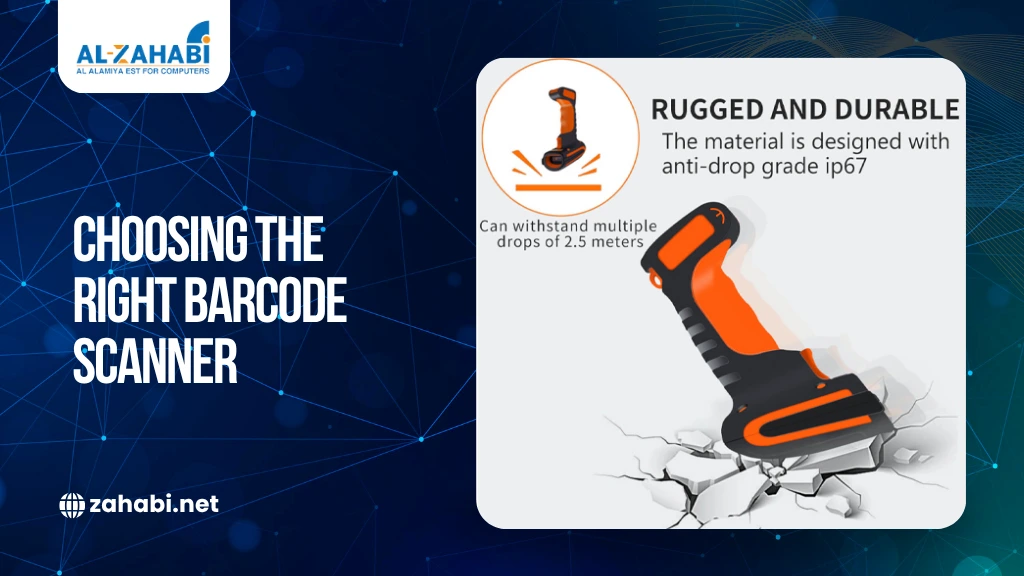
Many barcode scanners for harsh environments are tested for repeated falls from heights between 1.5 and 2 meters. These tests simulate real working conditions, such as drops onto concrete floors or warehouse surfaces. Standard scanners usually survive occasional impact, but repeated exposure often shortens their lifespan significantly.
3. Dust and Moisture Protection
Dust gradually affects scanner performance. Warehouses, factories, and logistics hubs often expose devices to particles and moisture.
Rugged scanners usually support IP-rated protection.
|
Protection Feature |
Standard Scanner |
Rugged Scanner |
|
Drop Rating |
Basic |
Industrial-tested |
|
Dust Protection |
Low |
High |
|
Moisture Resistance |
Minimal |
Advanced |
|
Continuous Usage |
Moderate |
Heavy-duty |
|
Environmental Tolerance |
Limited |
Strong |
Many durable barcode scanners include IP54, IP65, or IP67 ratings. This improves long-term reliability.
4. Industrial Internal Components
Durability goes beyond the outer body. Rugged scanners often include: Industrial scan engines, stronger triggers, reinforced connectors, and higher-capacity batteries.
These internal upgrades help devices survive long operating shifts. Many industrial scanning devices are designed specifically for continuous warehouse usage.
Environments Where Standard Scanners Perform Well
Rugged scanners are not necessary for every business environment. Standard barcode scanners remain a practical option for operations that involve controlled conditions, lower scanning volumes, and minimal physical handling. Retail billing counters, pharmacies, reception desks, and boutique stores are common examples where standard scanners perform efficiently without requiring industrial-grade protection.
For instance, a small fashion store using barcode scanners only at checkout may not benefit from rugged hardware because devices stay in fixed positions and face limited environmental stress. In these cases, standard scanners provide enough performance for daily operations.
They also offer advantages such as lower upfront investment, lightweight handling, easier deployment, and simple staff training. Businesses with predictable workflows and limited inventory movement often prefer these systems because they balance functionality and cost effectively. The choice between standard and rugged scanners ultimately depends on how demanding the work environment is.
Industrial Environments That Need Rugged Scanners
1. Warehousing and Logistics Operations
Warehouses are among the largest users of rugged scanning equipment because operations involve continuous movement and high scanning volumes. Employees regularly handle pallet tracking, inventory movement, dispatch processing, and shipment verification across large storage areas.
This is where rugged technology for warehouses becomes important. Devices move through forklift zones, loading bays, and dispatch stations throughout the day. In these environments, rugged scanners reduce interruptions and maintain performance during busy operational periods.
Many businesses also combine rugged scanners with a rugged mobile computer and an industrial barcode printer to improve inventory workflows and real-time tracking.
2. Manufacturing Facilities
Manufacturing environments introduce dust, machine vibration, and long working hours. Devices often remain active near machinery.
Consumer-grade equipment usually struggles here. This is why many facilities prefer rugged devices for industrial use. Durability directly supports productivity.
3. Cold Storage Operations
Cold environments create unique challenges. Moisture and condensation affect electronics.
Repeated movement between temperature zones increases stress. Rugged scanners designed for industrial environments handle these conditions better. Cold chain logistics frequently rely on this setup.
4. Distribution Centers
Distribution hubs process large scanning volumes daily. Products move constantly. Scanner interruptions affect productivity quickly.
Many operations depend on long-lasting barcode scanners because replacement during busy periods becomes difficult.
Comparing Scanner Lifespan in Real Operations
One of the biggest questions businesses ask before buying scanning equipment is which scanner actually lasts longer in real working environments. Standard scanners usually perform well in light-duty settings such as retail counters, pharmacies, and reception desks where handling conditions remain controlled, and scanning volume is moderate.
However, industrial environments create very different challenges. Repeated drops, dust exposure, continuous handling, and long operating shifts increase wear over time. Warehouses and logistics facilities often place much greater stress on devices compared to retail operations.
Rugged scanners are designed specifically for these conditions. Their reinforced construction, industrial components, and stronger protection features help extend operational life. As a result, many rugged scanners continue performing reliably for years even in demanding warehouse and distribution environments.
Here is a practical comparison:
|
Factor |
Standard Scanner |
Rugged Scanner |
|
Operational Lifespan |
Lower |
Higher |
|
Failure Risk |
Moderate to High |
Lower |
|
Repair Frequency |
Higher |
Lower |
|
Reliability |
Moderate |
Strong |
For example, a rugged scanner operating inside a warehouse may continue functioning after years of handling. The same environment could shorten the life of a standard scanner significantly.
Cost Versus Long-Term Value
Rugged scanners generally cost more than standard devices, which often makes businesses hesitate during the purchasing stage. However, the actual value should be measured through operational performance rather than only initial investment.
Lower repair frequency, reduced downtime, and longer replacement cycles often improve return on investment over time. These are some of the most important rugged barcode scanner benefits, especially for warehouses and logistics operations.
For example, a rugged scanner may cost more initially but still reduce overall expenses if it prevents repeated repairs and avoids workflow interruptions during peak inventory periods.
Practical Buying Guide for Barcode Scanners
1. Review the Work Environment First
The environment should always guide decisions. Businesses should evaluate: Dust exposure, moisture levels, temperature conditions, and drop risks. Retail stores usually need lighter protection. Industrial facilities often need stronger durability.
2. Measure Daily Scanning Volume
Low-volume operations do not always need rugged hardware. Warehouses processing thousands of scans daily often do. Continuous activity increases device stress. This affects lifespan directly.
3. Evaluate Mobility Requirements
Businesses handling inventory movement usually combine rugged devices with a wireless barcode scanner setup to improve mobility and scanning efficiency. Wireless scanners improve flexibility.
Fixed checkout environments may prefer wired models. Businesses handling inventory movement usually combine rugged devices with a handheld scanner setup.
4. Check Battery and Ergonomics
Long shifts require reliable power. Employees using scanners for hours need comfortable handling. Trigger durability also matters. A strong device with poor ergonomics may still reduce productivity.
5. Consider Total Ownership Cost
Scanner pricing should not be evaluated only through the initial purchase cost. Businesses should also consider repair frequency, downtime risks, replacement cycles, and the impact scanner failures may have on daily operations. A low-cost scanner may appear economical at first, but repeated repairs and interruptions can increase long-term expenses.
For industrial environments such as warehouses and distribution centers, reliability often delivers better value than a lower upfront price. The most cost-effective scanner is usually the one that reduces operational disruptions and lasts longer under real working conditions.
Real Business Examples
A retail pharmacy operating from a fixed checkout counter may use standard scanners successfully because the environment remains controlled and scanning volume is predictable. In such cases, industrial durability offers limited additional value.
The situation changes in warehouses and distribution centers. Employees move devices continuously between storage racks, shipment areas, and dispatch stations. Drops, dust exposure, and heavy handling become common. Rugged scanners perform better in these environments because they are designed for repeated industrial use.
Cold storage facilities provide another example. Low temperatures and moisture exposure create challenges that often shorten the lifespan of standard devices. Rugged scanners built for demanding conditions usually deliver better operational consistency.
Conclusion
Choosing between rugged barcode scanners vs standard scanners depends on where the scanner will operate. Standard devices remain practical for retail counters and low-volume environments, while rugged scanners deliver better durability, reliability, and lifespan in industrial operations. Warehouses, logistics hubs, manufacturing sites, and distribution centers often benefit more from rugged hardware because operational continuity matters more than upfront cost.
FAQs
1. Which scanner type works better for high-volume warehouse operations?
Rugged scanners usually perform better in high-volume environments because they are built for continuous scanning, repeated handling, and demanding warehouse workflows. They help reduce downtime during busy operations.
2. Are rugged barcode scanners vs standard scanners suitable for the same work environment?
No. Rugged barcode scanners vs standard scanners are designed for different environments. Standard scanners work well in retail and offices, while rugged models suit warehouses, logistics hubs, and industrial facilities.
3. What features should businesses check before buying a rugged scanner?
Businesses should evaluate drop resistance, IP rating, battery life, scanning range, connectivity options, and environmental protection before selecting a rugged scanner.
4. Do rugged scanners improve inventory accuracy in warehouses?
Yes. Rugged scanners support continuous operations with fewer interruptions, helping warehouse teams maintain faster scanning speed and better inventory accuracy.
5. Are rugged barcode scanners suitable for outdoor operations?
Yes. Many rugged scanners are designed for outdoor environments and support dust protection, moisture resistance, and temperature variations commonly found in field operations and logistics sites.






Add comment