
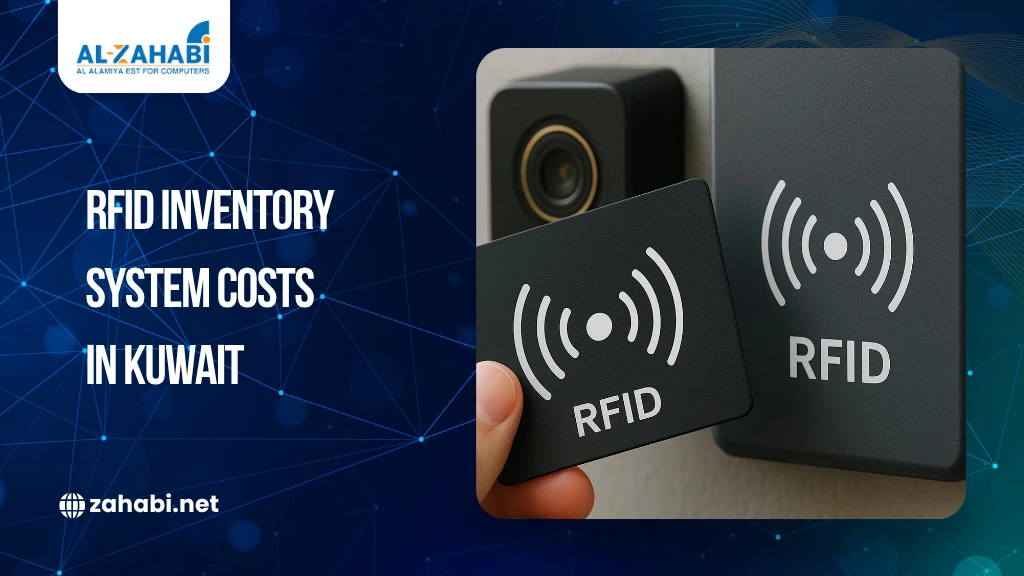
Inventory accuracy has become a major priority for warehouses, retailers, and distribution businesses across Kuwait. As inventory volumes grow, manual tracking and traditional barcode systems can create delays, stock discrepancies, and labor-intensive processes. Businesses looking to improve visibility and operational efficiency are increasingly turning to RFID technology.
Whether you operate a warehouse, retail chain, or manufacturing facility, knowing where the costs come from can help you make a smarter investment decision. While RFID systems can require a higher upfront investment than barcode-based solutions, they offer benefits such as real-time inventory tracking, faster stock audits, and improved inventory accuracy.
The total cost depends on several factors, including RFID tags, readers, software, installation, and system integration requirements. This guide breaks down RFID pricing components and explains what businesses in Kuwait should expect when budgeting for an RFID inventory system.
Key Takeaways:
- RFID system costs vary based on business size and requirements.
- RFID tags, readers, and software are the main cost components.
- Warehouses generally require larger RFID investments than retail stores.
- Long-term labor savings can offset initial implementation costs.
- Scalability should be considered before choosing a system.
Understanding RFID Inventory Systems
An RFID inventory system uses radio frequency technology to identify, track, and manage inventory without requiring direct line-of-sight scanning. Unlike barcode systems, RFID can read multiple tagged items simultaneously, making inventory tracking faster and more automated.
A typical RFID system consists of RFID tags attached to products or assets, RFID readers that capture tag information, antennas that extend reading coverage, and software that processes inventory data. Many businesses invest in the complete RFID solutions to integrate these components into a centralized inventory management system. Together, these components provide real-time visibility into inventory movement.
For example, a warehouse receiving a shipment can automatically capture inventory data as products pass through an RFID-enabled entry point. Instead of manually scanning each item, multiple products can be recorded instantly, reducing labor and improving accuracy.
This automation is one reason many businesses evaluate RFID as a long-term inventory management solution.
Main Components That Affect RFID Inventory System Cost
The total RFID inventory system cost depends on several hardware and software components. Understanding each component helps businesses build realistic budgets.
1. RFID Tags
RFID tags are attached to inventory items and contain electronically stored information. They are available in different formats depending on the application.
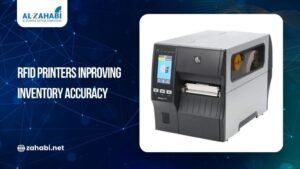
Businesses managing large inventory volumes often use RFID printers to print and encode RFID labels efficiently before deploying them across warehouses, retail stores, and distribution centers. Active RFID tags include batteries and offer longer read ranges but come at a higher cost.
Businesses looking to improve inventory visibility can also explore how RFID printers improve inventory accuracy in retail & warehousing, including the role of RFID label encoding and automated inventory tracking.
Pricing varies depending on:
- Tag durability requirements
- Read range
- Quantity ordered
- Industry application
For example, retail inventory tags are usually less expensive than industrial asset-tracking tags designed for manufacturing environments.
2. RFID Readers
RFID readers capture information from RFID tags and send it to the inventory system.
Businesses typically choose between handheld and fixed readers.
Reader Type | Typical Use | Relative Cost |
Handheld Reader | Inventory audits | Lower |
Fixed Reader | Automated tracking | Higher |
Handheld readers are suitable for stock counts and inventory checks, while fixed readers automate inventory movement tracking at doors, loading bays, and warehouse zones.
The number of readers required significantly affects project costs.
3. RFID Software
Software acts as the control center of an RFID inventory system.
It helps businesses:
- Track inventory movement
- Generate reports
- Monitor stock levels
- Manage warehouse operations
- Integrate with existing systems
Software costs vary based on features, user licenses, reporting capabilities, and integration requirements. Businesses requiring advanced analytics and ERP integration often invest more in software than organizations using RFID for basic inventory visibility.
4. Installation and Setup
Implementation costs are often overlooked during budgeting.
Installation may include:
- Site surveys
- Reader positioning
- Network configuration
- System testing
- Employee training
A warehouse with multiple inventory zones may require more extensive setup than a small retail stockroom.
These implementation costs can significantly affect overall project pricing.
RFID Inventory System Cost Breakdown in Kuwait
There is no single price for RFID systems because every business has different operational requirements. A small retail store may only need a limited number of readers and tags, while a large warehouse could require a full-scale RFID infrastructure.
The table below shows how different components contribute to the overall investment.
Component | Estimated Cost Impact |
RFID Tags | Low to Moderate |
RFID Readers | Moderate to High |
RFID Software | Moderate |
Installation | Moderate |
Integration | Variable |
The final RFID inventory system cost depends on inventory volume, warehouse size, automation requirements, and software complexity. Businesses should evaluate total implementation costs rather than focusing on a single hardware component.
Factors That Increase RFID System Costs
Several operational factors influence pricing.
1. Warehouse Size
Larger facilities require more readers, antennas, and infrastructure. A small stockroom may only need a few RFID checkpoints, while a distribution center may require coverage across receiving, storage, picking, and shipping zones. As warehouse size increases, infrastructure costs typically rise.
2. Inventory Volume
Businesses managing thousands of SKUs require more RFID tags and greater system capacity. High inventory turnover can also increase ongoing tag consumption and replacement costs.
Organizations with large product volumes generally see higher implementation expenses than businesses with smaller inventories.
3. Integration Requirements
Many companies want RFID systems to connect with ERP platforms, warehouse management systems, or inventory software.
While integration improves visibility and automation, it can also increase implementation complexity. Custom integrations often require additional development and testing.
4. Environmental Conditions
Certain environments require specialized RFID hardware. Warehouses with metal shelving, manufacturing facilities, and cold storage operations may need RFID equipment designed for challenging conditions. These specialized components can increase project costs.
RFID vs Barcode Cost Comparison
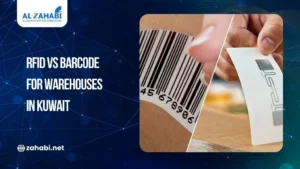
Many businesses compare RFID with traditional barcode systems before investing. Barcode solutions generally cost less initially because hardware and labels are relatively inexpensive.
Businesses evaluating RFID vs barcode inventory tracking often compare both technologies based on cost, accuracy, and scalability. For a detailed comparison, read our guide on RFID vs barcode labels: which is better for warehouse inventory in Kuwait?
RFID systems require a larger upfront investment but offer greater automation and visibility.
Factor | RFID | Barcode |
Initial Cost | Higher | Lower |
Manual Scanning | Less | More |
Inventory Visibility | Real-Time | Limited |
Labor Requirement | Lower | Higher |
Scalability | Strong | Moderate |
Businesses evaluating RFID vs barcode inventory tracking often discover that RFID delivers greater efficiency for larger operations. However, understanding the differences between RFID and traditional barcode labeling systems is equally important before making an investment decision.
Long-Term Return on Investment
While RFID costs more initially, many businesses focus on long-term operational savings.
RFID can help reduce:
- Manual inventory counting
- Labor costs
- Inventory discrepancies
- Stock losses
- Audit time
For example, a warehouse that previously spent several days performing inventory audits may complete the same process much faster using RFID technology.
Improved inventory accuracy also helps businesses make better purchasing and replenishment decisions. Over time, these benefits can offset the initial implementation investment.
Industry-Specific RFID Cost Considerations
1. Warehouses and Distribution Centers
Warehouses typically require the most comprehensive RFID deployments.
These operations often use:
- Fixed readers
- High tag volumes
- Automated inventory tracking
- Real-time stock visibility
As a result, warehouse projects usually represent the highest RFID investment levels.
2. Retail Businesses
Some retailers also extend RFID technology beyond inventory management by using RFID-enabled employee and access cards. Businesses implementing these systems often benefit from understanding how to print an ID card for employee identification, visitor management, and access control applications.
3. Manufacturing Facilities
Manufacturers use RFID for:
- Asset tracking
- Production monitoring
- Work-in-progress visibility
- Inventory management
Costs depend largely on operational complexity and tracking requirements.
Choosing the Right RFID System for Your Budget
Selecting the right system requires more than comparing hardware prices.
1. Define Your Business Objectives
Start by identifying the primary goal.
Do you need:
- Better inventory accuracy?
- Faster stock audits?
- Asset tracking?
- Warehouse automation?
Clear objectives help determine system requirements.
2. Start with a Pilot Deployment
Many businesses begin with a limited implementation before rolling out RFID across the entire operation. A pilot project helps validate performance and identify potential challenges. This approach also reduces financial risk.
3. Plan for Future Growth
Businesses should choose scalable solutions that support expansion. A system that meets today’s requirements may become limiting as inventory volumes increase. Planning often reduces future upgrade costs.
Conclusion
The RFID inventory system cost in Kuwait depends on multiple factors, including RFID tags, readers, software, installation, and integration requirements. While RFID systems typically require a higher initial investment than barcode-based solutions, they can deliver significant long-term value through improved inventory visibility, faster audits, reduced labour costs, and better operational efficiency. Businesses should evaluate both current needs and future growth plans before selecting an RFID solution.
FAQs
1. What factors affect the RFID inventory system the most?
Warehouse size, RFID tag volume, reader requirements, software capabilities, and integration complexity are the biggest factors affecting overall system cost.
2. Is an RFID inventory system more expensive than barcode tracking?
Yes. RFID generally requires a higher upfront investment, but it can improve inventory visibility and reduce manual labour over time.
3. Can small businesses implement RFID inventory systems?
Yes. Many RFID solutions are scalable, allowing businesses to start with smaller deployments and expand as operational needs grow.
4. Does RFID help reduce inventory management costs?
RFID can reduce manual counting, improve stock accuracy, and streamline inventory processes, helping businesses improve operational efficiency.
5. Is the RFID inventory system cost worth the investment?
For businesses managing large inventories or complex warehouse operations, the RFID inventory system cost is often justified through long-term productivity gains and improved inventory accuracy.



Add comment