Why do some products consistently perform better than others, while some remain unnoticed despite similar placement or pricing? The answer often lies in data rather than assumptions. Businesses today rely on POS (Point of Sale) data to understand how customers actually behave during purchasing decisions.
POS data is not just a record of transactions. It reflects patterns, preferences, and behaviors that directly influence business outcomes. When analysed correctly, it allows businesses to identify what drives sales, what limits conversions, and how customer choices evolve over time.
What Is POS Data And Why Does It Matter?
POS data includes all information generated during a transaction, such as product-level purchases, transaction value, purchase timing, and payment methods.
At a surface level, this data appears operational. However, its real value lies in how it reveals patterns over time. Instead of looking at isolated transactions, businesses can analyse trends that provide deeper insight into customer behavior.
For clarity, POS data typically includes:
- Sales transactions across products and categories
- Product-level purchase data
- Time and frequency of purchases
- Payment methods and transaction values
Each of these data points contributes to understanding customer intent. For example, frequent purchases of specific items may indicate recurring demand, while time-based patterns can highlight peak business hours.
When interpreted correctly, POS data becomes a foundation for making informed decisions rather than relying on guesswork.
How Barcode Scanning Enables Data Accuracy?
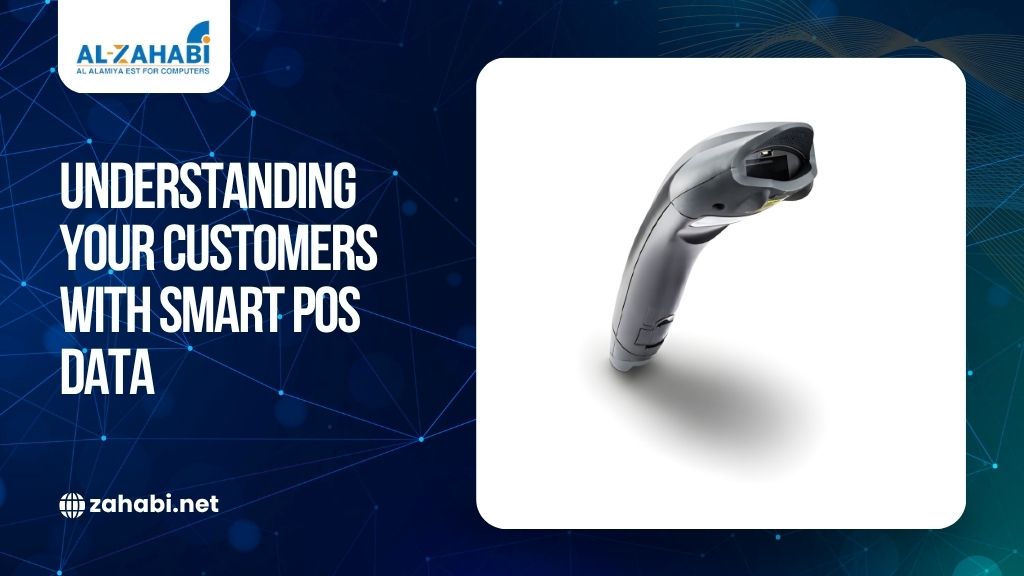
The effectiveness of POS data depends entirely on its accuracy. Even small errors in data collection can lead to incorrect insights and poor decisions. This is where barcode scanning technology in Kuwait becomes critical.
Barcode scanning eliminates the need for manual data entry, ensuring that every transaction is recorded accurately and consistently. This improves both operational efficiency and data reliability.
Key operational benefits include:
- Real-time product identification during transactions
- Reduction in manual entry errors
- Faster and more efficient checkout processes
These improvements directly impact data quality. When businesses rely on accurate transaction data, they can confidently analyse trends, identify high-performing products, and optimise operations without uncertainty.
Inaccurate data leads to flawed insights. Accurate scanning ensures that every decision is backed by reliable information.
Inventory Scanning And Stock Visibility
Customer behavior is strongly influenced by product availability. If a product is frequently unavailable, it disrupts purchasing patterns and affects overall sales performance.
This is where inventory scanning solutions in Kuwait play a crucial role. These systems provide real-time visibility into stock levels, allowing businesses to align inventory with demand.
From an operational perspective, inventory scanning supports:
- Real-time stock tracking across locations
- Identification of fast-moving and slow-moving products
- Prevention of stockouts and overstocking
These capabilities ensure that businesses can respond proactively to demand changes. For example, if POS data shows increasing demand for a product, inventory systems can trigger timely restocking.
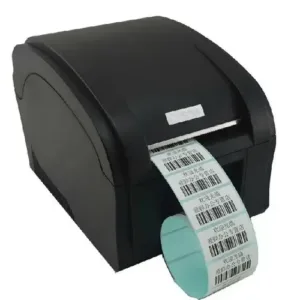
This alignment between sales data and inventory management ensures that customer demand is consistently met, improving both efficiency and customer satisfaction, especially when barcode labels remain clear and scannable across high-volume operations.
Understanding Customer Buying Behavior
POS data provides detailed insight into how customers make purchasing decisions. By analysing transaction patterns, businesses can identify trends that are not immediately visible.
Some of the most valuable behavioral insights include:
- Purchase frequency and repeat buying patterns
- Average basket size and product combinations
- Seasonal demand variations
- Preference for specific product categories
These insights allow businesses to move beyond basic sales tracking. For instance, identifying commonly purchased product combinations can help create effective bundling strategies.
A simple example would be customers frequently buying related products together. This pattern can be used to improve product placement or design targeted promotions that increase overall transaction value.
Instead of reacting to sales performance, businesses can anticipate customer needs and adjust strategies accordingly.
Role Of RFID Vs Barcode In Data Collection
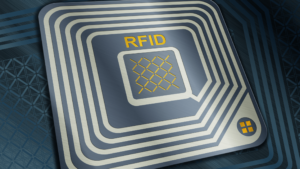
Understanding RFID vs barcode in Kuwait is important when evaluating how data is collected and used.
The following comparison highlights how these technologies differ:
| Feature | Barcode Systems | RFID Systems |
| Data Capture | Line-of-sight required | No line-of-sight required |
| Speed | Moderate | Very fast |
| Accuracy | High | Very high |
| Data Volume | Limited | High |
| Use Case | Transaction-level | Bulk tracking & visibility |
This comparison shows that barcode systems are ideal for accurate transaction-level data, while RFID systems provide broader visibility across large-scale operations.
In practical terms, barcode scanning ensures precise sales data, whereas RFID enables real-time tracking of multiple items. Businesses often choose based on operational scale and the level of insight required, as advanced data capture technologies are increasingly used to improve traceability and real-time visibility across supply chains.
Using POS Data For Business Decisions
The true value of POS data lies in its application. Businesses that actively use this data can improve efficiency, increase sales, and optimise operations.
POS data supports several key decisions:
- Optimising product placement based on sales performance
- Adjusting pricing strategies according to demand trends
- Designing targeted promotions aligned with customer preferences
- Improving inventory planning and replenishment
These decisions are not isolated. They are interconnected and driven by consistent data analysis.
A structured approach helps businesses maximise the value of POS data:
- Collect accurate transaction data through scanning systems
- Monitor inventory movement regularly
- Analyse product performance trends
- Identify patterns in customer behavior
- Adjust strategies based on data insights
When applied consistently, this approach allows businesses to transition from reactive decision-making to proactive strategy planning, particularly when scanning systems are fully aligned with POS platforms and inventory workflows.
Integrate With Business Systems
POS data becomes significantly more valuable when integrated with other systems such as inventory management, ERP platforms, and CRM tools.
Integration allows businesses to connect different data points and gain a complete view of operations. For example, combining POS data with inventory systems ensures accurate stock updates, while CRM integration helps track customer preferences.
This interconnected system improves forecasting, enhances operational efficiency, and enables better decision-making.
Industry research on retail analytics also highlights that integrating sales and inventory data improves demand forecasting accuracy, allowing businesses to respond more effectively to market changes.
Conclusion
POS data plays a central role in understanding customer buying behavior by transforming transaction data into actionable insights. It provides clarity on purchasing patterns, customer preferences, and demand trends.
When supported by accurate data collection through barcode scanning and enhanced by technologies like RFID, businesses gain deeper visibility into their operations.
As businesses continue to rely on data-driven strategies, the ability to interpret and act on POS data becomes a key factor in improving performance, enhancing customer experience, and achieving long-term growth, especially when businesses take the time to evaluate the right combination of scanning, POS, and inventory systems for their specific operations. In many cases, speaking with an expert helps clarify what actually fits your setup instead of relying on generic solutions.
Frequently Asked Questions
What Is POS Data In Retail?
POS data refers to information collected during transactions, including product details, purchase timing, and transaction value.
How Does Barcode Scanning Improve Data Accuracy?
Barcode scanning eliminates manual entry errors and ensures accurate, real-time data capture during transactions.
What Are Inventory Scanning Solutions?
Inventory scanning solutions help track stock levels in real time and align inventory with customer demand.
What Is The Difference Between RFID And Barcode Systems?
Barcode systems require direct scanning, while RFID allows bulk data capture without line-of-sight.
How Can Businesses Use POS Data To Improve Decisions?
Businesses can analyse POS data to optimise pricing, inventory, promotions, and overall operational strategies.


 by
by