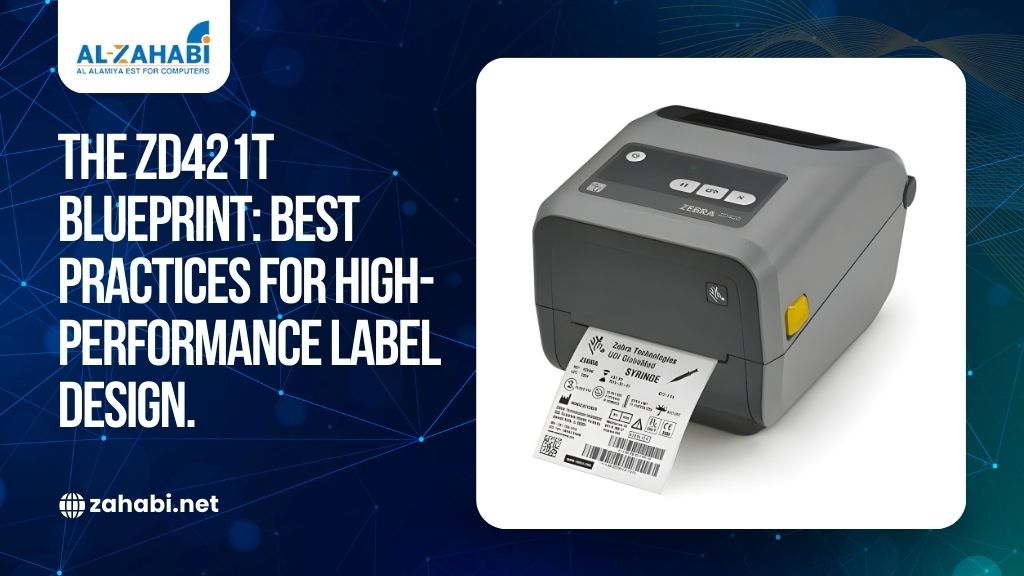
If you use thermal transfer printing, you already know that labels alone do not determine print quality. The ribbon you choose plays just as important a role. Many businesses pause at this stage and ask themselves a simple but critical question. Should I use a resin ribbon or a wax ribbon? The answer is not universal. It depends on how the label will be used, where it will be stored, and how long the information needs to last.
Choosing the wrong ribbon can lead to faded barcodes, smudged text, or labels that fail under heat or handling. This is why understanding the difference between resin and wax options is essential before investing in barcode ribbons for your operation.
At Zahabi, we work with businesses across retail, logistics, healthcare, and warehousing, helping them choose ribbon solutions that actually perform in real conditions. Letās break it down clearly.
Understanding Thermal Transfer Ribbons First
Thermal transfer printing works by using heat to transfer ink from a ribbon onto a label surface. The ribbon acts as the ink source, and its composition determines how durable the print will be.
There are three common ribbon types: wax, resin, and wax-resin blends. In this guide, we focus on the two ends of the spectrum, wax and resin, so you can make a confident choice when selecting barcode ribbons.
For a complete understanding of thermal transfer ribbons and their uses, read āUnderstanding Thermal Transfer Ribbons: A Comprehensive Guideā
What Is a Wax Ribbon and Where Does It Work Best?
Wax Ribbon Basics
Wax ribbons are the most commonly used and cost-effective option. They are designed for printing on paper labels and work well for applications where labels are not exposed to harsh conditions.
The print produced by a wax ribbon is clear and readable, but it is more sensitive to friction, moisture, and heat. This makes wax ribbons ideal for short-term labeling needs.
Best Use Cases for Wax Ribbons
Wax ribbons are commonly used in:
- Retail price tags
- Shipping and logistics labels
- Carton and box labeling
- Temporary inventory identification
If your labels are handled lightly and used within a short timeframe, wax ribbons offer excellent value. For many businesses, this is the starting point when selecting barcode ribbons for daily operations.
What Is a Resin Ribbon and Why Is It More Durable?
Resin Ribbon Basics
Resin ribbons are designed for high durability. Instead of melting easily like wax, resin ink bonds strongly with the label surface, creating a print that resists heat, chemicals, scratching, and moisture.
This durability makes resin ribbons suitable for synthetic labels and demanding environments where print failure is not an option.
Best Use Cases for Resin Ribbons
Resin ribbons are commonly used in:
- Asset and equipment labeling
- Chemical and pharmaceutical labeling
- Outdoor or industrial environments
- High-friction or high-temperature areas
If your labels must remain readable for months or years, resin is the right choice. This is especially important for businesses that rely on long-term traceability and compliance.
Key Differences Between Wax and Resin Ribbons
Durability and Resistance
Wax ribbons produce clean prints but wear down faster when exposed to rubbing, heat, or moisture. Resin ribbons are built to withstand all three, making them the preferred choice for harsh environments.
Label Compatibility
Wax ribbons work best on standard paper labels. Resin ribbons are typically used with synthetic labels such as polyester or polypropylene.
Cost Considerations
Wax ribbons are more affordable upfront. Resin ribbons cost more, but they reduce the need for reprinting and label replacement over time. When evaluating barcode ribbons, cost should always be considered alongside performance.
Print Speed and Heat Requirements
Wax ribbons require lower heat and print faster. Resin ribbons need higher heat settings, but they deliver far stronger print adhesion.
Which Ribbon Should You Choose for Your Business?
The right choice depends on how your labels are used. Ask yourself a few practical questions. Will the label be exposed to heat or chemicals? Will it be handled frequently? Does it need to last long-term, or is it temporary?
For shipping, retail, and basic inventory use, wax ribbons are usually sufficient. For industrial, healthcare, or asset tracking needs, resin ribbons provide the reliability required.
This is where many businesses benefit from expert guidance. At Zahabi, we help customers choose barcode ribbons based on real usage conditions, not guesswork.
To find the right ribbon for your labeling needs, read āComparing Different Types of Barcode Ribbons ā Which One Is Best for Your Business?ā
How Zahabi Supports Your Barcode Printing Needs?
At Zahabi, we supply a wide range of barcode printing solutions, including high-quality ribbons compatible with leading thermal transfer printers. Whether you need wax or resin options, we help match the ribbon to your label material, printer model, and application.
If you are already using thermal transfer printers, choosing the right ribbon is the next step toward consistent, professional results.
Conclusion
The choice between resin and wax ribbons comes down to durability, environment, and label lifespan. Wax ribbons are cost-effective and ideal for short-term use, while resin ribbons deliver unmatched resistance for demanding applications. Understanding these differences helps you avoid print failures and ensures your labels perform exactly as expected.
At Zahabi, we believe the right ribbon makes all the difference. By selecting the correct option from our range of barcode ribbons, you protect accuracy, improve efficiency, and build a more reliable labeling system.
FAQs
Which ribbon lasts longer, wax or resin?
Resin ribbons last significantly longer and resist harsh conditions.
Are wax ribbons suitable for outdoor use?
No, wax ribbons are best for indoor and short-term applications.
Do resin ribbons work with paper labels?
They can, but they are usually paired with synthetic labels.
Are resin ribbons more expensive than wax ribbons?
Yes, but they reduce reprints and label replacement costs.
Can Zahabi help me choose the right ribbon?
Yes, we guide customers based on printer type and application.
Do I need to change printer settings for resin ribbons?
Yes, resin ribbons require higher heat settings for proper bonding.