No products in the cart.

Shopping cart (0)
Subtotal: د.ك0.000
Spend د.ك3,050.000 to get free shipping
Congratulations! You've got free shipping.
Menu
Categories
- All in one terminal | Pos Machines | Zahabi
- Barcode Printing Solution
- Biometrics Attendance System
- ID Cards
- Kiosk
- Mobile Computer in Kuwait
- POS Accessories
- POS Machines
- Price Checker Kios | Pos Machines | Zahabi
- RECEIPT PRINTER
- RFID & Hardware Solutions
- Uncategorized
ZAHABI
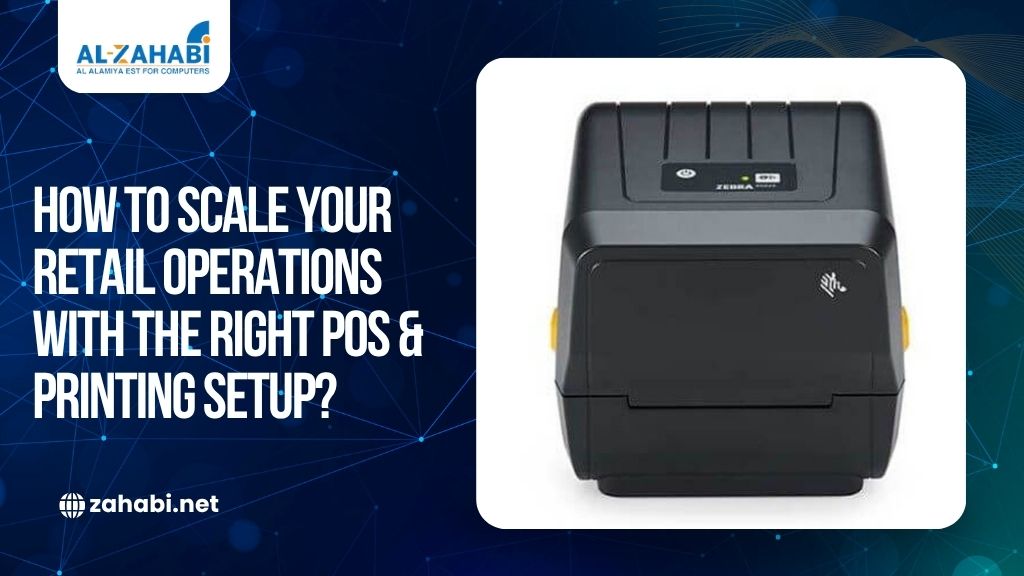
How to Scale Your Retail Operations with the Right POS & Printing Setup?
- By Zahabi
- Topics in this article: pos, pos machine
Scaling a retail business is often seen as a natural next step, but the reality is far more complex than simply opening new locations or increasing product availability. As operations expand, systems that once worked efficiently begin to break under pressure, creating bottlenecks in billing, inventory tracking, and decision-making.
In growing retail environments, managing higher transaction volumes, maintaining inventory consistency across locations, and understanding customer demand becomes increasingly difficult. Without structured systems in place, businesses may experience growth in sales but a decline in operational control.
This is where a well-integrated combination of POS systems, printing infrastructure, and retail sales analytics in Kuwait becomes essential. Instead of reacting to problems, businesses can operate with clarity, consistency, and data-driven precision.
What Challenges Do Retailers Face When Scaling Operations?
Retail expansion introduces multiple operational challenges that directly affect efficiency and profitability.
Some of the most common issues include:
- Increasing transaction volumes that often leads to slower checkout processes
- Inventory inconsistencies across multiple store locations
- Lack of centralized reporting and data visibility
- Difficulty in accurately tracking customer demand
These challenges are not isolated. When systems are not aligned, small inefficiencies quickly multiply across locations, resulting in lost sales opportunities, operational delays, and reduced customer satisfaction.
Without a structured approach, scaling often increases complexity instead of improving performance.
How Do POS Systems Support Retail Growth and Expansion?
A POS system is far more than a billing interface. It acts as the central operational hub where transactions, inventory data, and customer interactions are captured and processed in real time.
In a scaling retail environment, POS systems enable:
- Centralized transaction management across multiple stores
- Real-time visibility into sales and inventory data
- Faster billing processes during peak business hours
- Integration with inventory management and analytics tools
These capabilities allow businesses to move beyond manual tracking and fragmented systems. More importantly, POS systems generate actionable insights through retail sales analytics in Kuwait, helping decision-makers understand sales performance, identify trends, and adjust strategies accordingly.
This transforms daily operations into a structured, data-driven process, especially when POS systems are designed to work seamlessly with inventory tracking and scanning workflows.
Why Are Printing Systems Critical for Retail Accuracy?
Printing systems are often underestimated, yet they form the backbone of accurate retail operations. Every barcode label, receipt, and pricing tag contributes to how data is captured and processed across systems.
In retail environments, printing systems support:
- Receipt generation for transaction records
- Barcode label printing for inventory identification
- Shelf and pricing labels for accurate product display
When printing quality is inconsistent, it directly affects barcode readability and scanning accuracy. This can lead to incorrect inventory data, delays at checkout, and disruptions in reporting systems.
In this sense, printing is not just an operational function. It is a critical component of reliable data capture and system efficiency, particularly when barcode labels are consistently printed with the right quality and clarity.
How Does Inventory Management Align with Customer Demand?
Inventory management becomes significantly more complex as businesses scale. Without proper visibility, retailers may struggle with overstocking slow-moving products while running out of high-demand items.
A structured system enables better alignment between inventory and demand through:
- Real-time stock tracking across locations
- Demand-based replenishment strategies
- Reduction of stockouts and overstock situations
By using customer purchase insights in Kuwait, businesses can analyze buying patterns and identify which products are consistently in demand. This allows retailers to plan inventory more effectively and respond to market trends with greater accuracy.
As a result, inventory management shifts from reactive decision-making to predictive planning.
How Do Sales Reporting and Analytics Drive Better Decisions?
Scaling requires more than operational efficiency. It requires visibility into performance across all levels of the business.
Modern tools such as sales reporting software in Kuwait provide detailed insights that support decision-making, including:
- Product-level performance tracking
- Store-wise sales comparisons
- Time-based analysis of sales trends
To understand how these systems work together, it is useful to look at the key components involved in retail scaling:
Key Systems for Retail Scaling
Before evaluating tools individually, it is important to recognize that each system plays a specific role in maintaining operational balance and data accuracy.
System | Purpose |
POS system | Transaction and sales tracking |
Printing system | Labels and receipts |
Reporting tools | Data analysis and insights |
Inventory system | Stock management |
These systems do not operate in isolation. Data collected through POS and barcode scanning feeds directly into reporting tools, creating a continuous flow of information that supports analysis and strategic planning.
Without this integration, businesses may collect data but fail to use it effectively, as accurate and connected data systems play a critical role in improving forecasting accuracy, reducing operational inefficiencies, and enabling data-driven retail decision-making.
What Insights Can Businesses Gain from Customer Buying Behavior?
Understanding customer behavior is essential for sustainable growth. Scaling is not just about increasing sales volume but about improving how decisions are made based on customer actions.
Using consumer behavior data in Kuwait, businesses can identify:
- Purchase frequency and repeat buying patterns
- Product combinations commonly bought together
- Seasonal variations in demand
These insights provide a deeper understanding of retail buying trends in Kuwait, allowing businesses to refine their strategies.
For example, identifying frequently purchased product combinations can support cross-selling opportunities. Similarly, recognizing seasonal demand patterns helps businesses adjust inventory and promotional strategies in advance.
This level of insight enables retailers to align operations with actual customer behavior rather than assumptions.
How Does Integration Between Systems Improve Retail Efficiency?
The true value of retail systems lies in how well they work together. Individually, POS, printing, and analytics systems provide operational support. When integrated, they create a unified ecosystem.
An integrated setup ensures:
- POS systems connect seamlessly with inventory and reporting tools
- Barcode printing aligns with stock management processes
- Real-time data flows across all operational levels
This integration reduces manual errors, eliminates data silos, and improves overall efficiency.
More importantly, it ensures that every decision is based on consistent and accurate data across all stores.
What Does It Take to Prepare for Multi-Store Expansion?
Expanding into multiple locations requires more than replicating existing processes. It requires standardization and scalability.
To support multi-store growth, businesses should focus on:
- Implementing standardized systems across all locations
- Maintaining centralized reporting dashboards
- Ensuring consistent labeling and printing processes
- Building scalable infrastructure that supports future growth
When these elements are aligned, businesses can expand operations without losing control over performance and efficiency.
What Are the Key Steps to Scale Retail Operations Effectively?
A structured approach to scaling ensures that growth is supported by systems rather than strained by them.
Key steps include:
- Implementing a centralized POS system across all locations
- Standardizing printing and labeling processes
- Tracking inventory in real time to maintain accuracy
- Using analytics tools to identify trends and performance gaps
- Adjusting operations based on data-driven customer insights
Each step strengthens the connection between operations, data, and decision-making, creating a scalable and efficient retail system.
Conclusion
Scaling retail operations requires more than expansion. It requires a system that can handle complexity while maintaining efficiency and accuracy.
A well-integrated setup combining POS systems, printing infrastructure, and retail sales analytics in Kuwait enables businesses to operate with greater control and make informed decisions based on real data.
As competition increases and customer expectations evolve, retailers that rely on structured systems and actionable insights will be better positioned to scale sustainably and improve long-term profitability, especially when businesses take a structured approach to selecting and integrating the right systems for their operations. In many cases, speaking with an expert helps clarify what setup actually fits your business rather than relying on generic solutions.
Frequently Asked Questions
1. What is retail sales analytics?
Retail sales analytics involves analyzing transaction and customer data to identify trends, optimize inventory, and improve business decisions.
2. How do POS systems help scale retail operations?
POS systems centralize transactions, provide real-time visibility, and integrate with inventory and reporting tools to improve efficiency.
3. What are customer purchase insights?
These insights help businesses understand buying patterns, product preferences, and customer behavior trends.
4. How can retailers track buying trends in Kuwait?
By analyzing sales data and using tools that capture retail buying trends in Kuwait, businesses can adjust inventory and marketing strategies.
5. What tools are used for retail sales reporting?
Retailers use sales reporting software in Kuwait to monitor performance, analyze trends, and support decision-making.

Zahabi
Topics in this article:
You may also like
The Role Of POS Data In Understanding Customer Buying Behavior
Zahabi
March 27, 2026
Barcode Scanner Types Explained: 1D vs 2D vs RFID
Zahabi
March 26, 2026
Why Printer Downtime Costs More Than You Think (And How to Avoid It)
Zahabi
March 23, 2026
How Healthcare Facilities Use Barcode & ID Printing for Patient Safety
Zahabi
March 17, 2026
ID Card Printers for Schools & Universities: What to Look For
Zahabi
March 14, 2026
You may also like

 by
by