No products in the cart.

Shopping cart (0)
Subtotal: د.ك0.000
Spend د.ك3,050.000 to get free shipping
Congratulations! You've got free shipping.
Menu
Categories
- All in one terminal | Pos Machines | Zahabi
- Barcode Printing Solution
- Biometrics Attendance System
- ID Cards
- Kiosk
- Mobile Computer in Kuwait
- POS Accessories
- POS Machines
- Price Checker Kios | Pos Machines | Zahabi
- RECEIPT PRINTER
- RFID & Hardware Solutions
- Uncategorized
ZAHABI
POS Systems for Restaurants in Kuwait: Features That Matter Most
- By Zahabi
- Topics in this article: pos, pos machine, pos supplier, pos system kuwait
Running a restaurant today involves much more than preparing great food. Owners and managers must handle orders, coordinate kitchen staff, process payments quickly, and track inventory all while maintaining a smooth customer experience.
During busy service hours, even small inefficiencies can slow down operations. Orders may get delayed, billing errors can occur, and manual tracking of ingredients may lead to waste. This is where modern restaurant technology becomes essential.
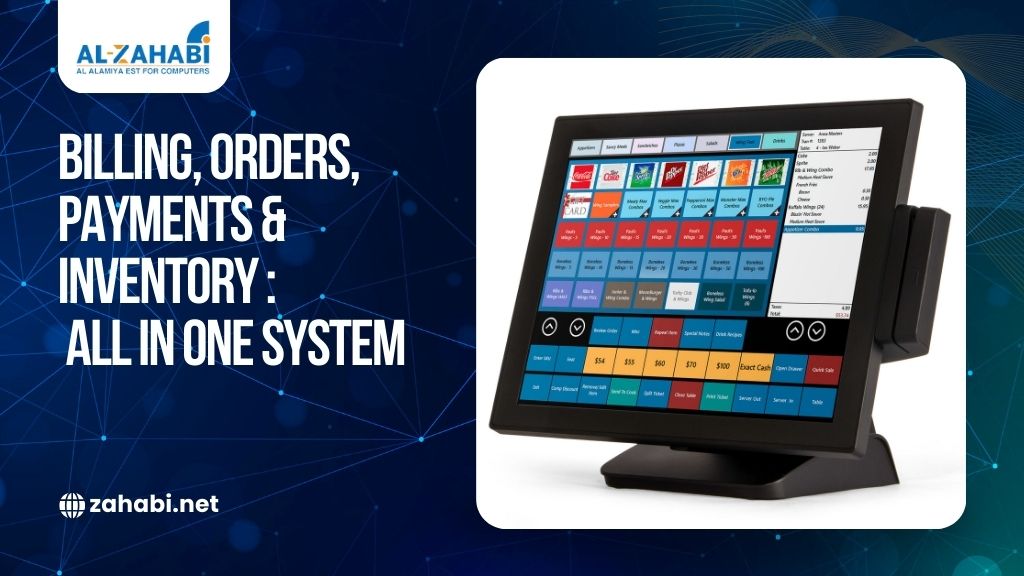
A well-designed restaurant billing system in Kuwait helps restaurants manage orders, payments, and reporting from a single platform. Instead of relying on separate tools for each task, a POS system connects the entire workflow — from the moment a customer places an order to the final payment.
Understanding the essential features of modern POS systems can help restaurant owners choose a solution that improves efficiency, reduces operational errors, and supports long-term business growth.
Why Do Restaurants in Kuwait Need Modern POS Systems?
Restaurants operate in a fast-paced environment where multiple tasks happen simultaneously. Staff must manage table orders, send instructions to the kitchen, track bills, and process payments quickly to keep service moving.
Imagine a busy dinner rush where multiple tables place orders at the same time. Without a connected system, even small communication gaps between the dining area and the kitchen can slow service.
Without an integrated system, these processes often rely on manual coordination. Orders written on paper or entered separately into billing software can create communication gaps between the dining area and the kitchen.
Modern POS systems simplify this workflow by connecting order management, billing, and reporting into one system. Many restaurants also integrate barcode scanners with POS systems to speed up transactions and improve accuracy during checkout and inventory tracking.
For example, when a waiter enters an order through a POS interface, the information is instantly sent to the kitchen display system. At the same time, the system updates the bill automatically.
This integrated workflow reduces mistakes, speeds up service, and allows staff to focus more on customer experience rather than administrative tasks.
What Features Should a Restaurant Billing System in Kuwait Include?
Efficient billing is one of the most critical functions in any restaurant. A reliable restaurant billing system in Kuwait helps restaurants generate accurate invoices quickly while managing complex dining situations such as group orders or split payments.
Modern POS billing features typically include:
- Fast bill generation that allows staff to process orders quickly during busy hours
- Split billing for groups, enabling customers to divide payments easily
- Itemized invoices that clearly list ordered items and prices
- Automatic tax calculations to ensure compliance with local regulations
These features are especially valuable in restaurants that serve large groups or operate during peak dining hours. Instead of manually calculating totals or splitting bills, the POS system performs these tasks instantly.
As a result, staff can handle more tables efficiently while maintaining accurate financial records.
How Do POS Systems Improve Order Management in Restaurants?
Order management is another essential function of restaurant POS systems. A well-designed system ensures that orders move smoothly from the dining area to the kitchen without delays or misunderstandings.
Key order management capabilities include:
- Table-side ordering using tablets or handheld devices
- Kitchen Order Ticket (KOT) management, which sends orders directly to the kitchen
- Order customisation, allowing staff to modify dishes based on customer preferences
- Split orders, enabling different dishes to be prepared at different stations
For example, when a customer requests modifications such as removing ingredients or adding extras, the POS system sends these instructions directly to the kitchen display. This eliminates the risk of miscommunication that often occurs with handwritten orders.
By digitising the order workflow, restaurants can improve order accuracy and reduce delays between ordering and food preparation.
What Payment Features Should a Modern Restaurant POS System Support?
Payment flexibility is becoming increasingly important for restaurants as customer preferences evolve. Many diners now expect multiple payment options, including contactless and mobile payments.
A modern restaurant payment system in Kuwait should support several payment methods, including:
- Card payments
- Mobile wallet payments
- Contactless transactions
- Multiple payment options for a single bill
For instance, when a group of customers wants to split the payment between cash and card, the POS system can process each portion separately without recalculating the bill manually.
Flexible payment options also improve table turnover. Faster payments mean staff can close bills quickly and prepare tables for the next guests, which is particularly important during peak hours.
How Do POS Systems Help Restaurants Manage Inventory and Staff?
Beyond billing and payments, POS systems also help restaurants manage inventory and staff performance more effectively.
Inventory Management
Restaurants rely heavily on accurate inventory tracking to maintain consistent menu availability. POS systems automatically monitor ingredient usage as orders are processed.
Typical inventory features include:
- Ingredient-level tracking to monitor stock consumption
- Automatic stock deduction when items are sold
- Low-stock alerts to prevent ingredient shortages
- Supplier management tools for tracking orders and deliveries
For example, when a dish containing chicken and vegetables is ordered, the POS system deducts those ingredients from the inventory database. This helps restaurant managers monitor stock levels in real time.
Effective inventory tracking also helps reduce food waste and improve purchasing decisions.
Staff Management
Restaurant POS systems can also support staff management by providing insights into employee performance and shift operations.
Useful staff management features include:
- Staff login credentials and role-based access permissions
- Employee performance tracking
- Shift scheduling tools
- Sales performance reports for each staff member
These tools help restaurant managers identify top-performing employees and monitor operational efficiency across different shifts.
How Do POS Reports Help Restaurant Owners Make Better Decisions?
One of the most valuable advantages of modern POS systems is access to detailed operational data.
POS reporting tools generate insights that help restaurant owners make informed decisions about menu pricing, staffing, and service improvements.
Common reports available in restaurant POS systems include:
- Daily sales reports that summarise revenue and transactions
- Menu performance reports that identify the best-selling dishes
- Peak-hour analysis to determine when restaurants are busiest
- Payment breakdown reports that track customer payment preferences
For example, if analytics show that certain dishes consistently underperform, restaurant owners can adjust pricing, improve recipes, or replace items on the menu.
These data-driven insights allow restaurants to continuously optimise operations.
What Role Does Technology Integration Play in Modern Restaurant POS Systems?
Modern restaurants often rely on several digital tools to manage their operations efficiently. POS systems play a central role by connecting these tools into a single operational ecosystem.
Typical integrations include:
- Online ordering platforms
- Delivery service applications
- Accounting software
- Inventory management systems
When these systems are connected, restaurant workflows become significantly more efficient. For example, an online delivery order can automatically appear in the POS system and send instructions directly to the kitchen.
Integration reduces manual data entry and ensures that operational information remains consistent across all platforms.
POS technology also provides deeper operational insights that help restaurants improve efficiency beyond basic billing tasks.
To better understand how these features support restaurant operations, the table below highlights some of the most valuable POS capabilities.
| Feature | Why It Matters |
| Billing automation | Enables faster checkout and reduces billing errors |
| Payment integration | Allows flexible payment options for customers |
| Inventory tracking | Helps reduce ingredient waste and maintain stock levels |
| Reporting tools | Supports better business decisions through data insights |
This combination of features allows restaurants to manage daily operations more effectively while maintaining consistent service quality.
How to Choose a Restaurant POS System?
Selecting the right POS system requires evaluating how well the system aligns with the restaurant’s workflow and operational needs.
Restaurant owners can follow these steps when choosing a POS solution:
- Identify restaurant workflow requirements and service style
- Evaluate billing and payment capabilities
- Check integration with delivery and accounting platforms
- Assess reporting, inventory, and staff management features
- Choose a scalable system that can support future growth
By considering these factors, restaurants can invest in technology that supports both current operations and long-term expansion.
Conclusion
Restaurant operations depend on efficient coordination between staff, kitchen teams, and customer service processes. Without the right tools, managing orders, payments, and inventory can quickly become complex.
A modern restaurant billing system in Kuwait connects these operational elements into one integrated platform. From managing table orders to generating invoices and analyzing sales performance, POS systems help restaurants streamline workflows and maintain accurate records.
By understanding the most important POS features — including order management, flexible payments, inventory tracking, and reporting — restaurant owners can choose a solution that supports both operational efficiency and long-term business growth.
Restaurants planning to implement a reliable POS solution can also consult industry experts to determine the most suitable setup for their operational needs.
Frequently Asked Questions
- What is a restaurant billing system?
A restaurant billing system is software that helps restaurants generate invoices, process payments, and manage sales transactions through a POS interface.
- How does a restaurant payment system work?
A restaurant payment system processes transactions through various methods such as cards, mobile payments, or contactless options while recording each payment in the POS system.
- What features should a restaurant POS system include?
Important features include order management, billing automation, flexible payment options, inventory tracking, reporting tools, and staff management capabilities.
- How do POS systems help restaurant inventory management?
POS systems automatically deduct ingredients when dishes are sold, track stock levels, and generate alerts when inventory runs low.
- What are the most important hospitality-related POS features in Kuwait?
Key hospitality-related POS features in Kuwait include billing automation, multi-payment support, kitchen order management, inventory tracking, and integration with delivery platforms.

Zahabi
Topics in this article:
You may also like
Barcode Scanner Types Explained: 1D vs 2D vs RFID
Zahabi
March 26, 2026
Why Printer Downtime Costs More Than You Think (And How to Avoid It)
Zahabi
March 23, 2026
How Healthcare Facilities Use Barcode & ID Printing for Patient Safety
Zahabi
March 17, 2026
ID Card Printers for Schools & Universities: What to Look For
Zahabi
March 14, 2026
POS Systems for Restaurants in Kuwait: Features That Matter Most
Zahabi
March 9, 2026
You may also like

 by
by