No products in the cart.

Shopping cart (0)
Subtotal: د.ك0.000
Spend د.ك3,050.000 to get free shipping
Congratulations! You've got free shipping.
Menu
Categories
- All in one terminal | Pos Machines | Zahabi
- Barcode Printing Solution
- Biometrics Attendance System
- ID Cards
- Kiosk
- Mobile Computer in Kuwait
- POS Accessories
- POS Machines
- Price Checker Kios | Pos Machines | Zahabi
- RECEIPT PRINTER
- RFID & Hardware Solutions
- Uncategorized
ZAHABI
How Healthcare Facilities Use Barcode & ID Printing for Patient Safety
- By Zahabi
Healthcare environments depend heavily on accurate patient identification. In hospitals and clinics, even a small mistake in identifying a patient can lead to serious medical errors such as incorrect medication administration, diagnostic mistakes, or treatment delays. For this reason, healthcare facilities rely on structured identification processes supported by technology.
Modern hospitals increasingly use barcode technology and identification printing solutions to ensure that patients are identified accurately at every stage of care. From admission and laboratory testing to medication administration and discharge, these systems help staff verify patient identity quickly and reliably.
A well-implemented patient identification system in Kuwait healthcare facilities allows medical professionals to connect patient data, treatment records, and medication information through barcode-based identification tools. By combining barcode wristbands, ID printing systems, and scanning technology, hospitals can significantly reduce errors while improving workflow efficiency and patient safety.
Why Accurate Patient Identification Matters in Healthcare?
Patient identification is considered one of the most critical safety practices in healthcare.
Hospitals handle thousands of patients daily, and each patient may receive multiple medications, laboratory tests, and clinical treatments during their stay. Without accurate identification systems, the risk of medical errors increases significantly.
Healthcare providers rely on identification systems to ensure that the correct patient receives the correct treatment at the correct time. For example, when a nurse administers medication, verifying the patient’s identity is essential to prevent medication errors.
Common risks associated with poor identification practices include:
- Administering medication to the wrong patient
- Performing diagnostic tests on incorrect patient records
- Surgical procedures conducted on the wrong patient
- Incorrect laboratory sample identification
Implementing a structured patient identification system in Kuwait hospitals helps healthcare providers maintain accurate patient records and reduce the likelihood of these errors. Identification technologies allow staff to verify patient identity instantly while maintaining a consistent workflow across departments.
How Patient Wristbands and Identification Labels Work?
One of the most widely used identification tools in hospitals is the patient wristband. When a patient is admitted to a healthcare facility, the hospital typically generates a wristband containing important identification information such as the patient’s name, hospital ID number, and barcode.
These wristbands are printed using specialized medical-grade printers and are designed to remain readable throughout the patient’s stay. Healthcare staff can scan the barcode on the wristband to access the patient’s medical records instantly.
Hospitals also use various types of identification labels, including:
- Barcoded patient wristbands
- Admission identification labels
- Bedside patient identification tags
- Medical chart labels
These tools allow nurses, physicians, and laboratory technicians to confirm patient identity before performing any clinical action. By scanning a wristband or identification label, healthcare staff can verify that the patient matches the medical record associated with the treatment.
This approach helps hospitals maintain consistent identification procedures across departments and ensures that patient data is accurately linked to clinical activities.
How Barcode Technology Supports Medical Records Management?
Barcode technology plays a significant role in managing patient information and medical records within healthcare facilities. When a patient is admitted to a hospital, the identification system generates a barcode that links directly to the patient’s electronic medical record.
This barcode can then be used across multiple hospital workflows, including:
- Linking patient wristbands with electronic medical records
- Tracking laboratory samples and diagnostic tests
- Managing medication administration records
- Verifying patient information during treatment
Hospitals often rely on medical record-focused barcode in Kuwait healthcare environments to connect patient identification with digital record systems. This ensures that every medical action performed on a patient is correctly associated with the appropriate record.
For example, when a laboratory technician collects a blood sample, the sample label contains a barcode linked to the patient’s record. Scanning the barcode ensures that the test results are assigned to the correct patient file.
This integration between barcode systems and medical records helps hospitals reduce administrative errors while maintaining accurate patient data. Similar barcode printing technologies are widely used in supply chain and inventory environments.
How Barcode Scanning Improves Clinical Workflows?
Barcode scanning technology is widely used throughout hospitals to support safe clinical workflows. Scanning devices allow healthcare staff to confirm patient identity before performing treatments or procedures.
Several daily hospital processes rely on barcode scanning, including:
- Medication administration verification
- Patient check-in and discharge processes
- Laboratory sample identification
- Blood transfusion verification
For example, before administering medication, a nurse may scan both the patient’s wristband and the medication barcode. The system verifies whether the medication matches the patient’s prescription. If there is a mismatch, the system alerts the healthcare professional immediately.
This verification process significantly reduces the risk of medication errors. It also ensures that every treatment is documented correctly within the hospital’s electronic records.
Barcode scanning systems create a structured workflow where patient identity is confirmed at multiple points throughout the process.
Role of Barcode Printers in Healthcare Identification Systems
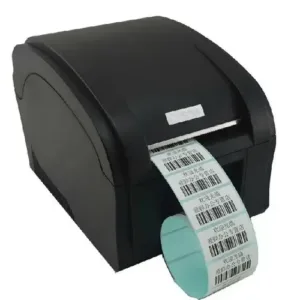
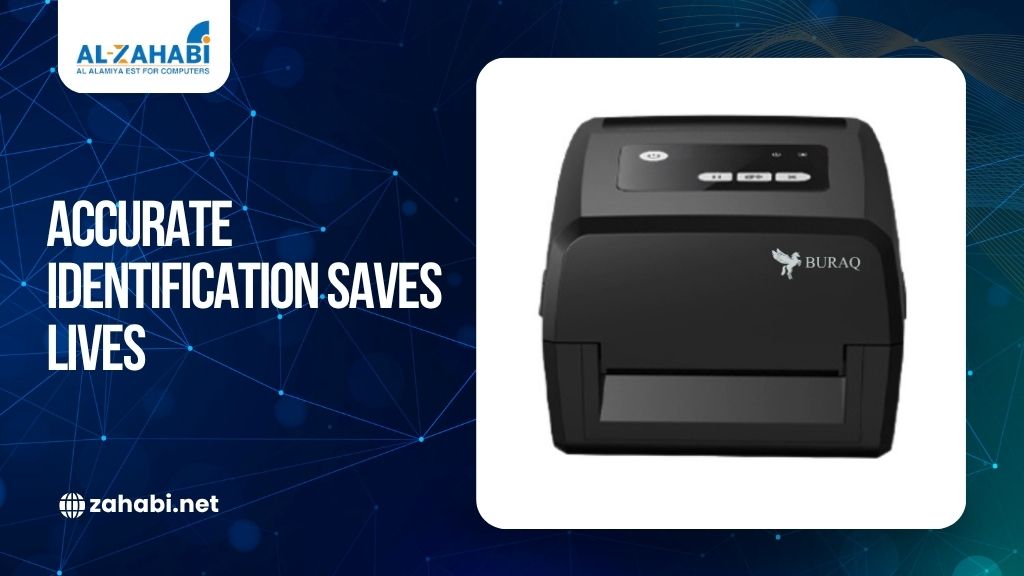
Barcode printers are essential tools that healthcare facilities use to produce patient identification materials. These printers generate barcoded wristbands and labels used across hospital departments.
Healthcare facilities typically use barcode printers to produce:
- Patient wristbands
- Specimen and laboratory sample labels
- Medication labels
- Medical record identification labels
In clinical environments, print quality and durability are extremely important. Wristbands and labels must remain readable despite exposure to moisture, cleaning agents, and frequent handling.
High-quality printing ensures that barcodes remain scannable throughout the patient’s stay, allowing hospital staff to rely on consistent identification across all departments.
How Patient Identification Systems Integrate with Hospital Software?
Modern patient identification systems are designed to integrate with digital healthcare platforms used by hospitals. Instead of operating as standalone tools, barcode and ID printing solutions connect directly with hospital information systems.
These systems commonly integrate with:
- Electronic Health Records (EHR) systems
- Laboratory Information Systems (LIS)
- Pharmacy management systems
- Patient admission and discharge systems
When these systems are connected, patient identification becomes part of the hospital’s digital workflow. For instance, when a patient is admitted, the hospital information system automatically generates the patient’s identification details and prints the barcode wristband.
Integration ensures that patient data flows consistently between departments. This reduces manual data entry, minimizes administrative errors, and improves overall operational efficiency within healthcare facilities.
Common Uses of Barcode Identification in Healthcare
Barcode identification systems are used across multiple hospital processes to ensure that patient information is recorded accurately and treatments are matched with the correct individual. By linking patient identity with medical data through barcode technology, healthcare facilities can reduce manual documentation errors and improve clinical workflow efficiency.
The table below highlights some of the most common ways barcode identification supports hospital operations.
| Application | Purpose |
| Patient wristbands | Patient identification |
| Medication labels | Medication verification |
| Laboratory samples | Accurate test tracking |
| Medical records | Data management |
These applications illustrate how barcode technology connects patient identification with treatment verification, laboratory tracking, and medical record management. By using barcode-based identification across multiple hospital departments, healthcare providers can maintain consistent patient verification practices while reducing the risk of clinical errors.
How Hospitals Implement Patient Identification Systems?
Healthcare facilities typically follow a structured process when implementing barcode-based identification systems. This process ensures that patient identification remains accurate throughout the care cycle.
Hospitals often implement identification systems using the following steps:
- Register patients within the hospital information system during admission
- Generate barcode wristbands containing patient identification details
- Print specimen labels, medication labels, and medical record labels
- Use barcode scanning to verify patient identity before treatment or medication
- Integrate identification systems with hospital software platforms
By following this workflow, hospitals create a reliable identification process that reduces the risk of medical errors while improving patient safety.
Conclusion
Accurate patient identification is a fundamental component of safe healthcare delivery. Hospitals must ensure that patients are correctly identified at every stage of treatment to prevent medical errors and maintain reliable clinical workflows.
Barcode technology and identification printing systems provide healthcare facilities with the tools needed to manage patient identification effectively. From wristbands and medication labels to laboratory sample tracking, barcode systems help medical staff verify patient identity quickly and accurately.
Healthcare providers looking to implement reliable identification and barcode printing solutions can also contact Zahabi’s technology specialists to explore systems designed for hospital and clinical environments.
Frequently Asked Questions
1.What is a patient identification system in hospitals?
A patient identification system is a structured process that healthcare facilities use to verify patient identity during medical care. These systems often include barcode wristbands, identification labels, and digital record integration.
2.How do barcode wristbands improve patient safety?
Barcode wristbands allow healthcare staff to scan and verify patient identity before performing treatments, administering medication, or collecting laboratory samples. This reduces the risk of medical errors.
3.Why are barcodes used in medical records?
Barcodes link patient identification with electronic medical records. This allows healthcare professionals to track treatments, laboratory tests, and medications accurately within the hospital system.
4.How does barcode technology reduce medication errors?
Barcode systems allow nurses to scan both the patient wristband and the medication label before administration. The system verifies whether the medication matches the patient’s prescription.
5.How do hospitals implement barcode identification systems in Kuwait?
Hospitals implement barcode identification by integrating patient registration systems, barcode wristbands, label printing, and scanning technology with electronic healthcare record systems.

Zahabi
Topics in this article:
You may also like
The Role Of POS Data In Understanding Customer Buying Behavior
Zahabi
March 27, 2026
Barcode Scanner Types Explained: 1D vs 2D vs RFID
Zahabi
March 26, 2026
Why Printer Downtime Costs More Than You Think (And How to Avoid It)
Zahabi
March 23, 2026
How Healthcare Facilities Use Barcode & ID Printing for Patient Safety
Zahabi
March 17, 2026
ID Card Printers for Schools & Universities: What to Look For
Zahabi
March 14, 2026
You may also like

 by
by