If you work with product packaging, inventory tracking, logistics, or retail operations, chances are you’ve asked yourself this at least once. Which label type actually fits my use case? Why do some labels fade faster while others last for years? And does the environment in Kuwait change how labels perform?
These are important questions because choosing the wrong Barcode Label can quietly create problems. Smudged text, unreadable barcodes, failed scans, or labels peeling off at the wrong moment can disrupt operations more than you expect. This is why understanding the difference between direct thermal and Thermal Transfer Labels matters far more than it seems on the surface.
At Zahabi, we work closely with businesses across Kuwait that rely on accurate labeling every single day. Let’s break down the real differences so you can choose with confidence.
Understanding the Basics Before Choosing a Label
Before comparing options, it helps to understand how these labels actually work. A Barcode Label is only as reliable as the printing method behind it. The printing technology determines durability, resistance, and how long information remains readable.
Direct thermal printing uses heat-sensitive paper that darkens when heat is applied. Thermal transfer printing, on the other hand, uses a ribbon that transfers ink onto the label surface. This single difference explains most of the performance gap between the two.
So the real question becomes this. Do you need speed and simplicity, or do you need durability and long-term clarity?
What Are Direct Thermal Labels and When Do They Make Sense?
Direct thermal labels are designed for short-term use. They do not require a ribbon, which makes printing faster and easier. Many businesses prefer them for shipping labels, receipts, and temporary tracking, where the label is used and discarded quickly.
In environments where speed matters more than lifespan, direct thermal Barcode Label solutions work well. However, these labels react to heat, light, and friction. Over time, exposure can cause fading, making barcodes difficult to scan.
In Kuwait’s climate, where heat exposure is common, this is something businesses should think about carefully. If a label is exposed to sunlight, warehouse heat, or transport conditions, fading can happen faster than expected.
What Are Thermal Transfer Labels and Why Do They Last Longer?
Thermal Transfer Labels are built for durability. They use ribbons made of wax, resin, or a combination of both to print crisp, long-lasting information onto the label surface. Because the image is transferred rather than heat-activated, the label resists fading, smudging, and environmental damage.
This is why Thermal Transfer Labels are widely used for product identification, asset tracking, shelf labeling, healthcare applications, and industrial environments. When labels need to remain readable for months or years, this method is usually the better choice.
For businesses in Kuwait dealing with storage, logistics, manufacturing, or outdoor exposure, Thermal Transfer Labels offer reliability that direct thermal labels cannot match.
Want labels that stay intact even in tough environments? Explore “How Thermal Transfer Printers Improve Label Durability” for expert advice.
Durability vs Environmental Resistance
One of the most common questions we hear is whether the label will survive real-world conditions. Will it fade in the heat? Will it smudge during handling? Will it remain scannable after weeks of use?
A direct thermal Barcode Label is sensitive to heat and light. Even friction can darken or distort the print. This makes it less suitable for long storage or outdoor use.
Thermal Transfer Labels, however, are resistant to heat, moisture, chemicals, and abrasion, depending on the ribbon type used. Resin ribbons, in particular, are designed for harsh conditions where label failure is not an option.
Print Quality and Barcode Scanning Accuracy
Barcode scanning accuracy depends heavily on print clarity. A Barcode Label with fading edges or inconsistent contrast can slow down scanning or fail entirely.
Direct thermal printing delivers good initial clarity, but quality degrades over time. Thermal transfer printing maintains sharp lines and consistent contrast, which is why Thermal Transfer Labels are preferred for high-volume scanning environments.
If your operations rely on fast and accurate scans, long-term clarity becomes a business requirement rather than a preference.
Cost Considerations Beyond the Surface Price
At first glance, direct thermal printing appears more affordable because it does not require ribbons. But cost should always be evaluated over the label’s lifecycle.
If labels need to be reprinted due to fading, damage, or scanning errors, costs add up quickly. Thermal Transfer Labels may involve ribbon costs, but they reduce reprints, errors, and downtime.
For many businesses, especially those scaling operations in Kuwait, investing in the right Barcode Label solution early prevents hidden costs later.
Choosing the Right Label for Your Business in Kuwait
The right choice depends on how and where the label will be used. Ask yourself a few practical questions. Will the label be exposed to heat or sunlight? Does it need to last beyond a few days? Will it be handled frequently or stored for long periods?
For short-term shipping or temporary use, a direct thermal Barcode Label may be sufficient. For inventory management, asset tracking, retail shelving, or industrial use, Thermal Transfer Labels provide the reliability businesses depend on.
At Zahabi, we help customers choose based on real use cases, not just specifications. The right label saves time, protects accuracy, and supports smoother operations.
For clear instructions on using a thermal printer and Tracmor to create custom label sizes, check out “How to Print Custom Asset and Inventory Barcode Label Sizes With a Thermal Printer Using Tracmor”.
Why Zahabi Helps You Choose the Right Labeling Solution?
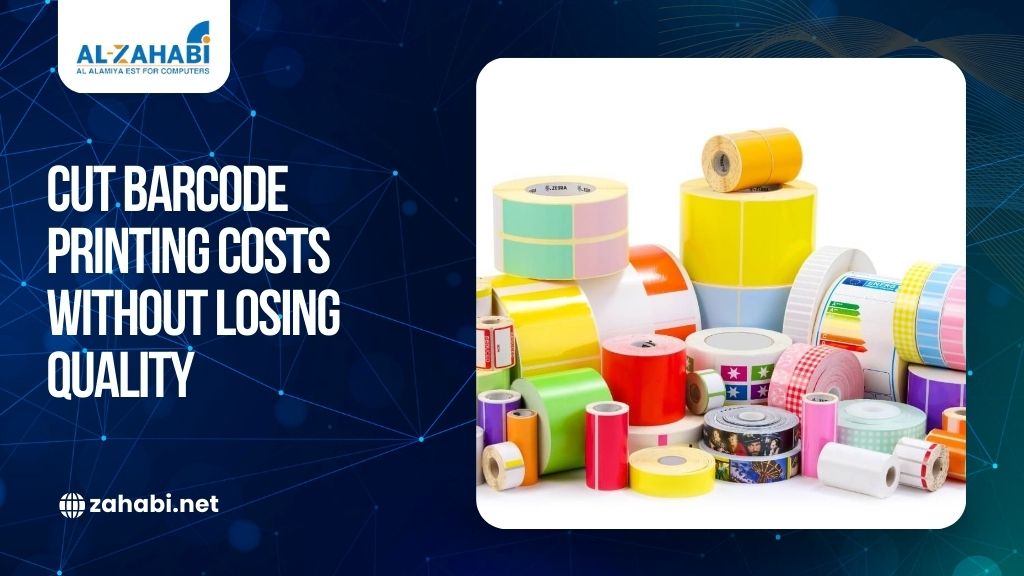
Labeling is not just about printing. It is about consistency, reliability, and long-term performance. At Zahabi, we supply a wide range of Barcode Label options, including high-quality Thermal Transfer Labels designed for different industries and environments.
We work with businesses across Kuwait to match labels with the right printers, ribbons, and applications. Whether you need labels for retail, logistics, healthcare, or warehousing, our goal is to ensure your labels perform exactly as expected.
Conclusion
Choosing between direct thermal and Thermal Transfer Labels is not just a technical decision. It is a practical one that affects daily operations, scanning accuracy, and long-term efficiency. The right Barcode Label ensures information stays readable, workflows stay smooth, and errors stay minimal.
At Zahabi, we believe informed choices lead to stronger systems. Whether you need fast, short-term labeling or durable, long-lasting solutions, we are here to help you select the option that truly fits your business needs in Kuwait.
FAQs
- Which label lasts longer, direct thermal or thermal transfer
Thermal transfer labels last significantly longer and resist fading. - Are Thermal Transfer Labels suitable for hot environments
Yes, they perform well in heat and harsh conditions. - Do direct thermal labels require ribbons
No, they print without ribbons using heat-sensitive paper. - Which Barcode Label is best for inventory tracking
Thermal transfer labels are better for long-term tracking. - Can Zahabi help me choose the right label type
Yes, we guide you based on your application and environment.