No products in the cart.

Shopping cart (0)
Subtotal: د.ك0.000
Spend د.ك3,050.000 to get free shipping
Congratulations! You've got free shipping.
Menu
Categories
- All in one terminal | Pos Machines | Zahabi
- Barcode Printing Solution
- Biometrics Attendance System
- ID Cards
- Kiosk
- Mobile Computer in Kuwait
- POS Accessories
- POS Machines
- Price Checker Kios | Pos Machines | Zahabi
- RECEIPT PRINTER
- RFID & Hardware Solutions
- Uncategorized
ZAHABI
Barcode Printing Solutions for Warehouses & Logistics Companies
- By Zahabi
- Topics in this article: barcode machine, barcode printing
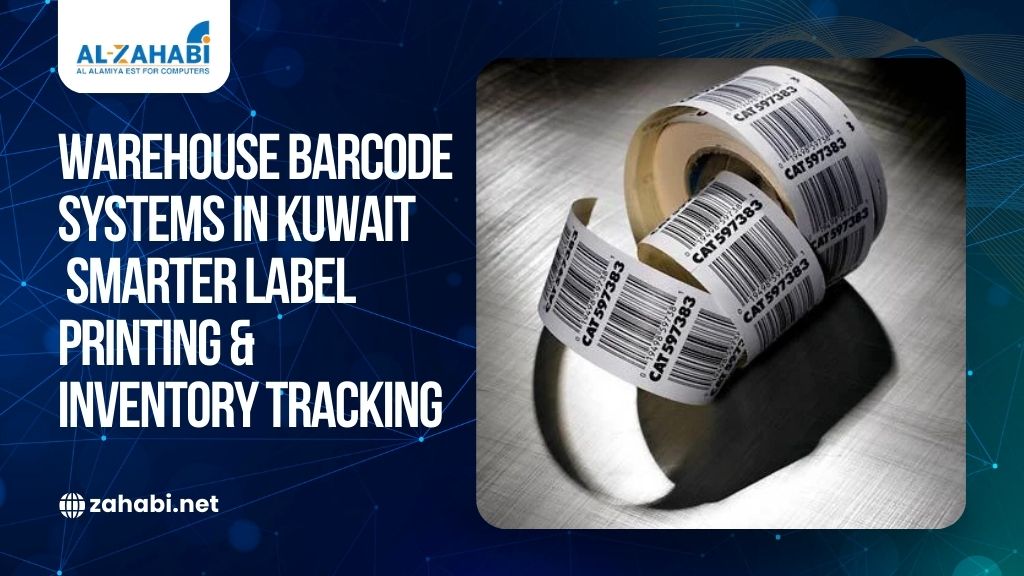
Why are businesses adopting a warehouse barcode system in Kuwait? Warehouse operations depend on speed, accuracy, and visibility. Every product moving through a warehouse must be tracked during receiving, storage, picking, packing, and shipping.
Without structured labelling systems, warehouses often rely on manual entry or disconnected tracking processes. These methods increase the risk of inventory errors, delayed shipments, and inefficient workflows.
A warehouse barcode system in Kuwait helps logistics teams automate identification and tracking processes. By combining barcode printers, durable labels, and scanning technology, warehouses can maintain accurate inventory records and streamline operations across the entire supply chain.
Why Do Warehouses Need Barcode Printing Systems?
Barcode labelling connects physical products with digital warehouse management systems. Every label scanned updates inventory data instantly, allowing teams to track stock movement in real time.
In warehouse environments, barcode systems support critical operational tasks such as:
- Inventory tracking across storage locations
- Receiving and put-away processes
- Order picking and packing operations
- Shipping and dispatch management
For example, a distribution centre processing 2,000 orders per day relies on barcode labels to ensure each package is correctly identified before shipping. Without automated scanning, manual entry errors can quickly disrupt order accuracy.
Barcode labelling reduces these risks while improving warehouse efficiency and traceability.
Key Components of a Warehouse Barcode System
A warehouse barcode system consists of multiple integrated components that work together to manage product identification and tracking.
Barcode Labels
Labels store encoded information about items, pallets, cartons, or storage locations. These labels allow scanners to identify products instantly.
Barcode Scanners
Warehouse teams use handheld or fixed scanners to read barcode data and update inventory records in real time.
Barcode Printers
Printers generate labels for inventory, shipments, shelves, and asset tracking.
Warehouse Management Software
Barcode systems typically integrate with Warehouse Management Systems (WMS) that manage stock levels, order fulfilment, and warehouse workflows.
For example, when goods arrive at a warehouse receiving a dock, barcode labels can be printed automatically and attached to pallets. Once scanned, the WMS assigns the correct storage location for the items.
Types of Barcode Printers for Warehouse Operations
Selecting the right barcode printer for warehouse operations is essential for reliable labeling performance and long-term scanning accuracy. Different printers support different operational needs depending on warehouse size and label volume.
Industrial Barcode Printers
Industrial printers are designed for high-volume warehouse operations.
They are commonly used in:
- Large distribution centres
- Manufacturing warehouses
- Logistics hubs handling thousands of shipments daily
These printers offer high print speed, durability, and consistent barcode quality.
Desktop Barcode Printers
Desktop printers are typically used in smaller warehouse environments.
Common use cases include:
- Small warehouse stations
- Back-office labelling tasks
- Limited daily printing volumes
Although compact, they still provide reliable barcode printing for inventory management.
Mobile Barcode Printers
Mobile printers allow warehouse staff to print labels directly on the warehouse floor.
These printers are useful for:
- On-floor pallet labeling
- Picking and packing stations
- Temporary labelling during receiving operations
Mobile printing helps reduce delays in labelling and improves workflow efficiency across large warehouse spaces.
In many warehouses, businesses use a combination of these printer types depending on the scale of operations and the location where labels need to be printed. The table below provides a quick overview of how each printer type typically fits into warehouse workflows.
| Printer Type | Best For | Volume |
| Desktop Printer | Small warehouses | Low |
| Industrial Printer | Large warehouses | High |
| Mobile Printer | On-floor labeling | Medium |
This comparison makes it easier for warehouse managers to determine which printer category aligns best with their operational requirements and daily label printing volume.
Best Label Materials for Warehouse Operations
Warehouse environments expose labels to conditions such as moisture, abrasion, and temperature changes. Choosing the correct label material ensures barcodes remain readable throughout the product lifecycle.
Common warehouse label materials include:
Paper Labels
Paper labels are suitable for short-term applications.
Typical uses include:
- Shipping cartons
- Temporary product identification
- Short storage durations
Synthetic Labels
Synthetic materials such as polypropylene or polyester offer greater durability.
These labels are ideal for:
- Long-term storage
- Harsh warehouse environments
- Outdoor logistics operations
Warehouse labels may need to resist:
- Abrasion during handling
- Moisture exposure
- Temperature fluctuations
- Frequent scanning during shipping
For example, pallet labels used in cold storage facilities must withstand condensation without losing barcode readability.
Types of Barcodes Used in Warehouses
Different barcode formats are used depending on the type of data being stored and the operational requirements of the warehouse.
Common barcode types include:
Code 128
Code 128 is widely used for logistics and warehouse applications. It supports high-density data encoding and efficient scanning.
GS1-128
GS1-128 barcodes are commonly used in global supply chains. They include standardised identifiers for products, shipments, and logistics units.
According to GS1 supply chain standards, structured barcode labelling improves traceability and reduces errors in logistics operations.
QR Codes
QR codes store larger amounts of data and can be scanned from multiple angles.
They are often used for:
- product information
- tracking documentation
- digital inventory records
DataMatrix
DataMatrix codes are compact and commonly used in industries where small label sizes are required.
How Print Quality Affects Scanning Accuracy?
Barcode scanning reliability depends heavily on print quality. Poorly printed labels can slow down warehouse operations and increase scanning errors.
Several factors influence a barcode printer’s print quality, including ribbon selection, printer resolution, and label compatibility.
Important factors affecting barcode readability include:
- Printer resolution (203 DPI vs 300 DPI)
- Barcode size and contrast
- Label material compatibility
- Print durability over time
For instance, a warehouse printing small barcodes on low-resolution printers may experience frequent scanning failures during picking operations.
Ensuring proper print quality helps maintain fast scanning and accurate inventory tracking.
System Integration with Warehouse Software
Barcode printing systems are most effective when integrated with warehouse management software.
Typical integrations include:
Warehouse Management Systems (WMS)
Barcode scanning updates inventory levels and product locations automatically inside the WMS.
Enterprise Resource Planning (ERP) Systems
ERP integration connects warehouse data with purchasing, finance, and supply chain management systems.
Inventory Management Software
Barcode labelling helps automate stock tracking across multiple storage locations.
For example, when an order is picked for shipment, the WMS can automatically generate shipping labels through the barcode printing system. This reduces manual work and improves operational accuracy.
How to Implement a Warehouse Barcode System?
Warehouses adopting barcode printing systems should follow a structured implementation process.
Step 1: Identify Inventory Tracking Requirements
Determine how products, pallets, and storage locations will be labelled and tracked.
Step 2: Choose Compatible Barcode Printers
Select printers capable of handling the required label volume and print quality.
Step 3: Select Durable Label Materials
Choose materials that withstand warehouse conditions, such as moisture and abrasion.
Step 4: Integrate with Warehouse Software
Connect barcode printing with WMS or inventory systems for automated label generation.
Step 5: Train Staff and Test Scanning Accuracy
Ensure warehouse teams understand labelling workflows and scanning procedures.
A well-implemented warehouse barcode system in Kuwait can significantly reduce manual entry errors while improving operational visibility.
Conclusion
Barcode printing solutions play a critical role in modern warehouse operations. By combining barcode printers, durable label materials, and scanning technology, warehouses can track inventory movement more accurately and reduce operational inefficiencies.
A properly implemented warehouse barcode system in Kuwait supports key logistics processes, including receiving, storage, picking, and shipping. It also helps businesses maintain accurate inventory records and improve order fulfillment speed.
As logistics operations continue to grow, investing in reliable warehouse label printing in Kuwait ensures that warehouse teams maintain efficient and scalable tracking systems.
Businesses planning to implement a barcode labeling workflow can also contact our team for guidance on selecting printers, label materials, and warehouse barcode solutions.
Frequently Asked Questions
- What is a warehouse barcode system?
A warehouse barcode system is a labelling and scanning system that allows warehouses to track products, pallets, and storage locations using barcode labels connected to inventory management software.
- What type of barcode printer is best for warehouse operations?
Industrial barcode printers are best for large warehouses handling high printing volumes, while desktop printers work well for smaller warehouse stations. Mobile printers allow on-floor labelling during warehouse operations.
- Why is durable warehouse label printing important?
Warehouse labels must remain readable despite handling, moisture, and temperature changes. Durable labels prevent scanning errors and reduce the need for reprinting.
- How do barcode labels improve inventory accuracy?
Barcode labels eliminate manual data entry. When scanned, they automatically update inventory records inside warehouse management systems, reducing errors and improving tracking accuracy.
- Where can businesses find warehouse label printing in Kuwait?
Businesses looking for warehouse label printing in Kuwait can work with barcode solution providers that offer printers, labelling materials, and system integration for warehouse automation.

Zahabi
Topics in this article:
You may also like
Barcode Scanner Types Explained: 1D vs 2D vs RFID
Zahabi
March 26, 2026
Why Printer Downtime Costs More Than You Think (And How to Avoid It)
Zahabi
March 23, 2026
How Healthcare Facilities Use Barcode & ID Printing for Patient Safety
Zahabi
March 17, 2026
ID Card Printers for Schools & Universities: What to Look For
Zahabi
March 14, 2026
POS Systems for Restaurants in Kuwait: Features That Matter Most
Zahabi
March 9, 2026
You may also like

 by
by