If your business ships products, sells goods, or manages equipment, labels are part of your daily work. Yet many companies treat them as basic supplies.
Choosing the wrong label can cause scanning errors, shipment delays, inventory mismatches, and repeated reprints. These small issues slowly increase labor costs and disrupt operations.
Understanding the types of labels used in business helps you choose the right option for shipping, retail, or asset tracking. This guide explains how they differ and how to select the right one for your workflow.
Why Label Classification Matters in Real Operations?
Labels connect physical items to digital systems, such as:
- Warehouse management software
- Retail POS systems
- Inventory platforms
- Asset tracking databases
When the correct label type is used, scanning is fast and reliable. When it is not, problems appear:
- Couriers reject unreadable shipping barcodes
- Retail checkout slows due to scanning errors
- Assets cannot be located during audits
- Labels fade in heat or moisture
- Reprints increase material and labor costs
The differences between label types are not cosmetic. They affect workflow accuracy and cost control.
Shipping Labels: Designed for Transit and Routing
Shipping labels are built for movement. Their purpose is to guide parcels from origin to destination.
Where are Shipping Labels Used?
Common environments include:
- E-commerce warehouses
- Courier hubs
- Distribution centers
- Retail replenishment shipments
Mini Case Example: An online electronics seller shipping 800 parcels per day relies on direct thermal shipping labels. If even 2 percent of barcodes fail to scan during transit, sorting slows, and customer complaints increase.
What Shipping Labels Must Do Well?
They must:
- Print clearly at high speed
- Remain readable during handling
- Stick securely to cartons
- Scan quickly at multiple checkpoints
They are scanned frequently but only for a short period.
Materials and Printing
Shipping labels are typically:
- Paper-based
- Printed using direct thermal technology
- Designed for short-term durability
Direct thermal printing works well because shipping labels do not need to last for months.
Business Risks of Using the Wrong Shipping Label
If the adhesive is weak or the print resolution is low:
- Parcels may be delayed
- Manual data entry increases
- Tracking errors occur
- Labor costs rise
In high-volume logistics, small label failures scale quickly.
Shipping Label – Snapshot
| Feature | Shipping Labels |
| Purpose | Routing & delivery |
| Lifespan | Days |
| Environment | Transit handling |
| Print Type | Direct thermal |
| Durability Need | Basic |
Product Labels: Built for Identification and Retail Sale
Product labels remain attached to items throughout storage and sale. They support both internal tracking and customer-facing information.
Where are Product Labels Used?
You will see them in:
- Supermarkets
- Apparel stores
- Electronics retailers
- FMCG distribution
Mini Case Example: A supermarket uses paper product labels in a refrigerated section. Within weeks, moisture weakens the adhesive. Labels peel off, requiring daily reprints and slowing checkout.
What Product Labels Must Support?
Product labels include:
- Product name
- SKU
- Barcode
- Price
- Brand details
- Manufacturing data
They must scan reliably at checkout and during stock checks.
Material and Durability Considerations
Product labels may require:
- Paper for dry retail shelves
- Polypropylene for moisture exposure
- Polyester for longer storage
Thermal transfer printing is preferred because it produces sharper barcodes that resist fading.
Cost Implications of Poor Product Labeling
When product labels fail:
- Checkout slows due to scanning retries
- Staff manually enter SKU numbers
- Inventory mismatches increase
- Reprint costs rise
Even a few seconds of delay per scan adds up in busy retail environments.
Product Label – Snapshot
| Feature | Product Labels |
| Purpose | Retail identification |
| Lifespan | Weeks to months |
| Environment | Shelf display |
| Print Type | Thermal transfer |
| Durability Need | Moderate |
Asset Tags: Built for Long-Term Internal Tracking
Asset tags are used to identify and track company-owned equipment. They are not meant for resale. They are for control and accountability.
Where are Asset Tags Used?
Asset tags are mainly used in:
- Corporate offices
- Manufacturing plants
- Hospitals
- Educational institutions
- IT departments
Mini Case Example: A manufacturing company tracks 1,200 tools. During annual audits, 7 percent cannot be scanned because asset tags faded due to chemical exposure. Replacing tags and reconciling records takes weeks.
What Asset Tags Must Do?
They must:
- Remain readable for years
- Resist cleaning chemicals
- Survive temperature changes
- Stay attached permanently
Remember: Asset tracking depends on durability.
Materials and Printing for Asset Tags
Common materials include:
- Polyester
- Tamper-evident labels
- Metalized labels
Thermal transfer printing with resin ribbon ensures long-lasting barcode clarity.
Operational Impact of Weak Asset Tags
If asset tags fail:
- Equipment may be mislocated
- Audit discrepancies increase
- Depreciation records become inaccurate
- Loss investigations take longer
Durability is not optional in asset management.
Asset Tag – Snapshot
| Feature | Asset Tags |
| Purpose | Equipment tracking |
| Lifespan | Years |
| Environment | Industrial & office |
| Print Type | Resin thermal transfer |
| Durability Need | High |
Side-by-Side Business Comparison
| Criteria | Shipping Labels | Product Labels | Asset Tags |
| Main Goal | Delivery routing | Retail sale | Internal control |
| Scan Frequency | High, short-term | Moderate | Periodic audits |
| Environmental Exposure | Transit | Retail environment | Long-term wear |
| Cost of Failure | Delayed shipments | Checkout slowdown | Asset loss risk |
Each label serves a specific workflow and is not interchangeable.
How Do You Decide Which Label Type Fits Your Business?
Ask these operational questions:
- How long must the label remain readable?
- Will it face heat, moisture, or chemicals?
- Is it scanned once or repeatedly over the years?
- Who scans it, courier, cashier, or internal auditor?
- What printing system do you currently use?
Your answers usually make the decision clear.
What Printing Method Works Best for Each Label Type?
Choosing the correct label material is only half the decision. Printing method matters equally.
Direct Thermal Printing
- No ribbon required
- Fast and cost-efficient
- Best for short-term shipping labels
- Limited durability
Thermal Transfer Printing
- Uses ribbon
- Higher barcode sharpness
- Longer-lasting print
- Required for product labels and asset tags needing durability
Mismatch between material and printing method causes:
- Smudged barcodes
- Premature fading
- Reprint waste
Proper alignment reduces long-term cost.
When Should You Upgrade Your Label System?
You may need to upgrade if:
- Reprint rates are increasing
- Barcodes fail to scan frequently
- Adhesive failure occurs in storage
- Asset audits show unreadable tags
- Shipping delays occur due to scanning issues
Upgrading label quality often reduces labor waste and improves system reliability.
Which Labeling Errors Lead to Operational Problems?
Major labeling errors are:
- Use paper labels in high-moisture environments
- Choose a low-cost adhesive for heavy equipment
- Print small barcodes at low resolution
- Ignore environmental exposure conditions
- Treat all label types as identical
Understanding the types of labels used in business prevents these costly oversights.
Final Thoughts
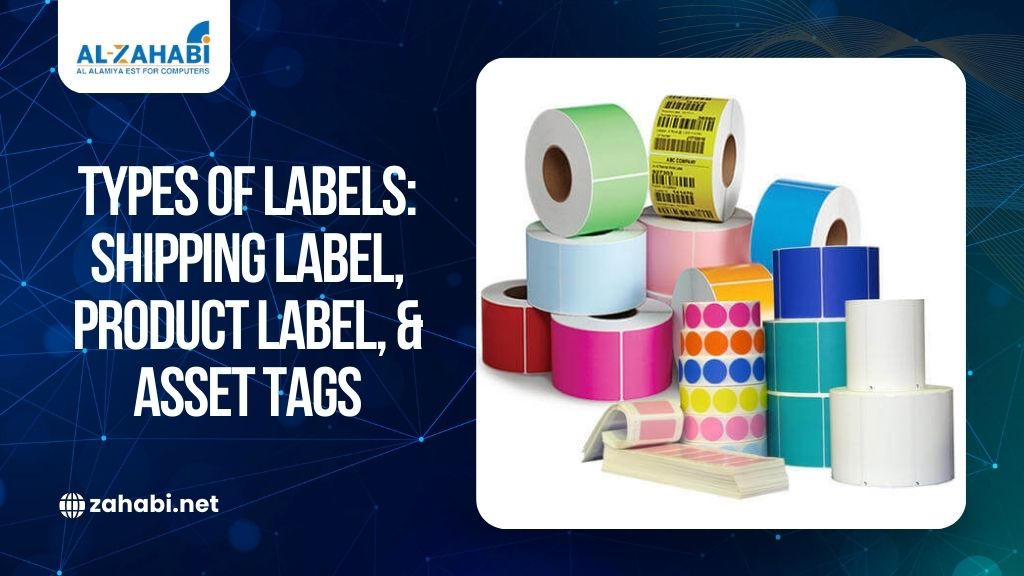
Shipping labels, product labels, and asset tags serve different operational purposes, and understanding those differences is essential for smooth business performance. Shipping labels are designed for movement and short-term tracking. Product labels support retail identification and customer transactions. Asset tags ensure long-term control and accountability of company equipment.
Choosing the right label type improves scanning reliability, reduces reprints, and prevents avoidable disruptions. If you are reviewing your labeling process, begin by assessing how long the label must last and what environment it will face. When label type, material, and printing method are aligned with your workflow, tracking becomes more accurate and daily operations run more efficiently.
Frequently Asked Questions
1. What are the main types of labels used in business?
The most common types of labels used in business are shipping labels, product labels, and asset tags. Each serves a different purpose based on lifespan, environment, and tracking requirements.
2. Can shipping labels be used as product labels?
Shipping labels are designed for short-term transit and usually lack long-term durability. Using them as product labels can lead to fading, peeling, and barcode scanning issues at checkout.
3. What is the difference between product labels and asset tags?
Product labels are meant for items that are sold and typically last weeks or months. Asset tags are used for internal equipment tracking and must remain readable for years under tougher conditions.
4. Which printing method works best for business labels?
Direct thermal printing works well for short-term shipping labels. Thermal transfer printing is better for product labels and asset tags that require sharper barcodes and longer durability.
5. How do I choose the right label for my business?
Start by evaluating how long the label must last and what environment it will face. Exposure to moisture, heat, chemicals, or repeated handling usually determines the correct label material and printing method.
6. What happens if I choose the wrong label type?
Using the wrong label can cause scanning failures, reprints, shipment delays, or asset tracking errors. Over time, these issues increase labor costs and reduce operational efficiency.


 by
by