Long queues at reception, forgotten membership cards and unauthorized access can make a busy gym harder to manage. When several members arrive together before work or after office hours, manually checking memberships can also put pressure on reception staff.
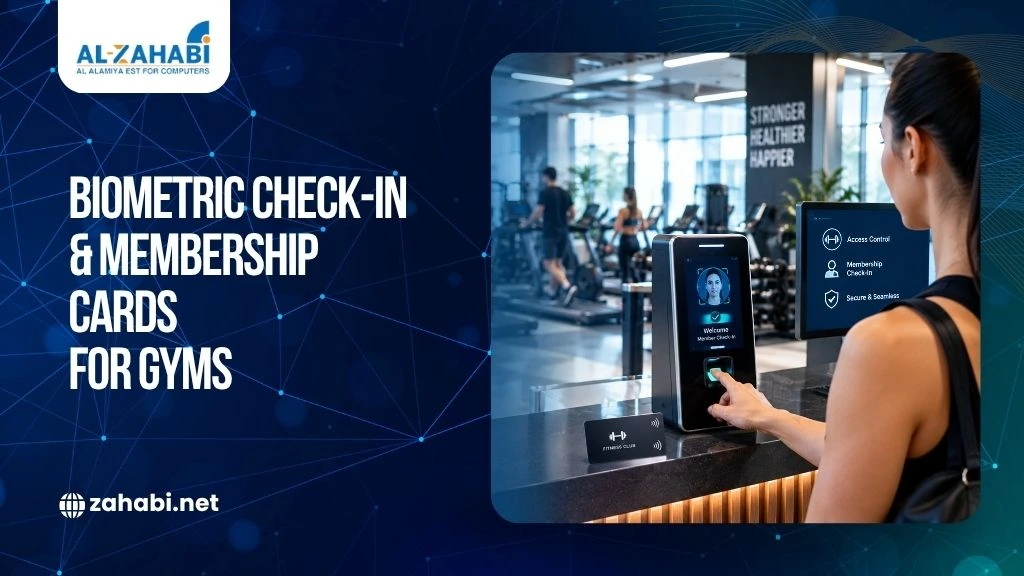
A gym biometric check-in in Kuwait can simplify this process by connecting a member’s identity with an access-control system. Instead of relying only on a physical card, a gym can use biometric authentication to verify members before allowing entry.
Membership cards still have an important role. They can provide a convenient identification option, support membership programmes and work alongside access-control technology.
For a fitness centre considering an upgrade, the goal is not simply to replace cards with biometrics. It is to create an access system that fits the gym’s membership process, staff workflow and security requirements.
Key Takeaways:
- Biometric check-in can reduce manual membership verification at gym entrances.
- Membership cards provide a practical identification option for fitness centres.
- Access control should connect with the gym’s membership management workflow.
- Kiosks and POS equipment can support self-service and front-desk operations.
- A combined card and biometric approach can give gyms more flexibility.
What Is a Gym Biometric Check-In in Kuwait?
A biometric check-in system verifies a member using a biometric characteristic rather than relying exclusively on a physical membership card.
Depending on the equipment and implementation, this can involve fingerprint or facial recognition technology. When selecting a biometric check-in method, comparing face recognition vs fingerprint systems can help gyms evaluate which authentication approach fits their member-entry workflow. Once the member is authenticated, the access-control system can check whether the membership permits entry.
For a gym, this creates a simple workflow:
Member arrives → identity is verified → membership status is checked → access is granted or denied.
The important point is that biometric hardware should not be viewed in isolation. The check-in system needs to work with the gym’s membership database and access-control process.
For example, if a member’s subscription has expired, successful biometric recognition should not automatically mean unrestricted entry. The system should follow the gym’s configured membership rules.
Why Fitness Centres Are Moving Beyond Traditional Check-In
A traditional gym reception often depends on staff to perform several tasks at once. They may need to greet members, check membership status, answer questions, process payments and handle new registrations.
During busy periods, this can create bottlenecks.
A digital access system can move routine verification away from the reception desk. Staff can then spend more time handling member requests instead of manually checking every person entering the facility.
This is particularly useful for gyms with extended opening hours or high member traffic.
A biometric system can also reduce dependence on a physical card being present at every visit. However, gyms should still consider offering alternative identification methods because not every member will want or be able to use biometric authentication.
How Biometric Access Control Works in a Gym
A typical fitness center access control setup combines several components.
1. Member Registration
The gym first creates the member’s profile in its membership system. Depending on the chosen solution, biometric credentials may be enrolled during registration.
The member’s subscription information can also be connected to their profile.
2. Identity Verification
At the entrance, the member interacts with the biometric reader.
The device compares the presented biometric information against the enrolled credentials according to the system’s configuration.
3. Membership Validation
The system checks whether the member is authorised to enter.
Rules can be configured around factors such as active membership status, access permissions or other gym-specific conditions.
4. Access Decision
The access-control system then allows or denies entry.
This creates a faster process than asking reception staff to manually verify every membership.
Where Membership Cards Still Make Sense
Biometrics do not necessarily make membership cards obsolete.
Physical cards remain useful because they are familiar, easy to issue and simple for members to carry.
A gym can use cards as the primary access method, an alternative to biometrics, or as part of a broader membership programme.
This is where membership card printing in Kuwait becomes relevant. A complete ID card system for gym membership identification can help fitness centres organise membership cards, card printing equipment and related identification supplies.
A professionally printed membership card can include the member’s name, photograph, membership number, expiry information and other approved details.
The exact information should depend on the gym’s operational and privacy requirements.
For a fitness chain with multiple branches, standardised membership cards can also create a consistent experience across locations.
Designing Better Membership Cards for Fitness Centres
A gym membership card should be practical rather than overloaded with information.
Useful elements may include:
- Member name
- Member photograph
- Membership ID
- Gym or branch identification
- Expiry date, where appropriate
- Barcode or QR code, if supported by the system
A barcode or QR code can give staff another way to identify the member when needed.
The card can be produced using suitable ID Cards & Accessories, including compatible card printers, card stock and related supplies.
When selecting membership credentials, comparing PVC vs smart ID card options for memberships can help gyms choose a card type that matches their identification and access requirements.
The design should also leave enough space for the card to remain readable and professional.
For a premium fitness club, card design can also reinforce the brand experience without compromising functionality.
Combining Biometrics and Membership Cards
The strongest setup for some gyms may be a combination of technologies rather than choosing only one.
For example:
Requirement | Possible solution |
Routine member entry | Biometric authentication |
Alternative identification | Membership card |
Front-desk verification | Card barcode/QR code |
New member registration | Kiosk or reception workstation |
Payments | POS machine |
Printed receipts | Receipt printer |
Stock or retail products | Barcode printing and scanning |
This approach gives the gym multiple ways to manage different situations.
For example, if a member’s biometric credential cannot be used during a particular visit, staff may be able to verify the member through another approved method.
Using Kiosks for Self-Service Gym Check-In
A Kiosk can complement biometric check-in by moving routine tasks away from the reception counter.
Exploring self-service kiosk options for gym check-in can help fitness centres determine whether automated stations could reduce reception queues during busy periods.
Depending on the software and configuration, a self-service kiosk could support activities such as:
- Member check-in
- Registration
- Membership information
- Renewal workflows
- Payment initiation
- Appointment or class check-in
The exact capabilities depend on the kiosk software and the gym’s membership platform.
For larger fitness centres, a kiosk can also help distribute member traffic during busy periods.
Imagine a gym with a queue forming at reception after working hours. If members can complete routine check-in through a self-service station, reception staff can focus on new registrations, membership questions and other tasks that require human assistance.
Connecting POS Systems to Gym Membership Operations
Gyms often manage more than memberships.
Many fitness centres also sell:
- Supplements
- Fitness accessories
- Branded clothing
- Drinks
- Personal training packages
- Membership upgrades
A POS Machine can help process these transactions alongside the gym’s other operational systems.
For example, a member arriving for a workout may renew a membership, purchase a gym T-shirt and receive a receipt during the same visit.
A suitable POS Accessories setup can support scanners, payment devices and other peripherals required at the front desk.
The goal is to keep these workflows organised instead of creating separate processes for every transaction.
Barcode Printing and Membership Identification
Barcodes can provide another layer of identification for gym membership cards.
A gym can print a barcode linked to a member ID and use a compatible scanner to retrieve the member’s profile.
Understanding different barcode scanner types for gym membership cards can help fitness centres choose scanning equipment that matches the barcode format and membership software they use.
This can be particularly useful where the gym wants a lower-cost alternative or backup to biometric access.
Barcode Printing equipment can produce membership labels or cards depending on the required application and compatible materials.
For example, a gym may use a barcode on a membership card while keeping biometric authentication as the main entry method.
This creates a flexible identification system without requiring every interaction to depend on one technology.
Mobile Computers for Gym Operations
A Mobile Computer can also be useful when gym employees need to verify information away from the reception counter.
Staff could use handheld devices for tasks such as checking membership information, managing equipment inventories or supporting events and promotions, depending on the software environment.
This becomes particularly useful for large fitness facilities with multiple activity areas.
For example, staff supervising a fitness event may need to verify registered participants without sending everyone back to the main reception desk.
The right mobile workflow depends on the gym’s software and connectivity requirements.
Privacy Matters When Using Biometric Systems
Biometric check-in requires more consideration than ordinary card-based identification because biometric information is personal data.
Kuwait’s Data Privacy Protection Regulation includes personal data relating to identifiable individuals and specifically references information such as personal fingerprints and genetic fingerprints within its definitions.
That means a gym considering biometric access should not treat the technology as simply another entrance device.
Before deployment, the gym should establish clear policies around:
- What information is collected
- Why it is collected
- How it is used
- Who can access it
- How it is protected
- How long it is retained
- What alternatives are available
The exact legal and compliance requirements depend on the system and processing activities, so gyms should obtain appropriate legal or privacy advice before implementation.
What to Consider Before Installing Biometric Gym Access
A biometric system should solve a specific operational problem. Before investing, evaluate the following areas.
- Member Volume
Estimate how many people enter during peak periods.
A small studio may have very different requirements from a large multi-branch fitness centre.
- Entry Workflow
Consider whether members currently queue at reception, scan cards, use turnstiles or require staff approval.
The new system should simplify this process rather than add another complicated step.
- Existing Software
Check whether the biometric system can integrate with the gym’s membership-management software and access-control hardware.
Integration is particularly important if membership status needs to determine entry automatically.
- Alternative Access
Consider what happens if a member cannot use biometric authentication.
A card, QR code or staff-assisted verification process may provide an alternative, depending on the gym’s system.
- Scalability
If the gym expects to add branches or significantly increase membership, choose equipment and software that can support the expected expansion.
A Practical Setup for a Kuwait Fitness Centre
Consider a multi-branch fitness centre that wants to reduce reception queues.
The gym could use biometric readers at controlled entrances, membership cards as an alternative identification method and a kiosk for routine self-service activities.
At reception, a POS Machine could handle membership payments and retail purchases, while a Receipt Printer provides transaction records.
Barcode equipment could support membership cards and retail inventory, while Mobile Computers could assist staff with activities away from the front desk.
This creates a connected technology environment rather than a standalone biometric system.
A scalable POS and printing setup for growing gyms can help multi-branch fitness centres manage membership payments, retail transactions and printed records as operations expand.
The exact configuration should be based on the gym’s member volume, software, access points and operational requirements.
When Should You Choose Cards, Biometrics or Both?
There is no single setup that fits every fitness centre.
A smaller gym with a straightforward membership process may find printed cards sufficient.
A high-traffic facility may benefit from biometric authentication to reduce routine reception interaction.
A larger fitness chain may combine biometrics, cards, kiosks and POS equipment to support different member and staff workflows.
The important question is not which technology sounds more advanced. It is which combination solves your actual access, identification and membership-management problems without making the customer journey harder.
How to Plan Your Gym Access-Control Upgrade
Start with the current process.
Map how a member joins, receives identification, enters the gym, renews a membership and interacts with reception.
Then identify where delays or manual work occur.
From there, determine whether biometric access, membership cards, kiosks, barcode identification or POS integration can address those specific problems.
Before purchasing hardware, also confirm software compatibility, data-handling requirements, installation needs and support arrangements.
This prevents a common mistake: buying individual devices first and discovering later that they cannot work together as required.
Conclusion
A gym biometric check-in in Kuwait can make member access faster and reduce routine verification work, but biometrics do not have to replace membership cards. A combination of biometric access, professionally printed cards, kiosks, barcode identification and POS equipment can create a more flexible gym operation.
The right solution depends on your member volume, existing software, access-control requirements and privacy considerations. Start with the workflow you need to improve, then build the technology around it.
1. Is biometric check-in suitable for gyms in Kuwait?
Biometric check-in can suit gyms that want to automate member verification and reduce routine reception work. Before implementation, you should assess your membership software, access-control hardware, alternative identification methods and privacy obligations. The system should fit your existing workflow rather than operate as a standalone device.
2. Can membership cards and biometric access be used together?
Yes. A fitness centre can use biometric authentication as its main entry method while keeping membership cards as an alternative identification option. Cards can also include a barcode or QR code for staff-assisted verification, depending on the gym’s software and access-control system.
3. What does fitness centre access control include?
Fitness centre access control can include biometric readers, card readers, turnstiles, controllers, software and membership databases. The exact configuration depends on how you want members to enter, how membership status is verified and whether different branches or access zones need separate permissions.
4. Why is membership card printing important for gyms?
Membership card printing in Kuwait allows gyms to provide members with physical identification linked to their membership records. Cards can include photographs, membership numbers and machine-readable codes, giving staff another way to identify members when biometric access is unavailable or when manual verification is required.
5. Can a kiosk be integrated with gym check-in?
A kiosk can support self-service check-in when its software is compatible with the gym’s membership platform. Depending on the configuration, members may be able to verify their identity, access membership information or complete selected transactions without requiring reception staff for every routine interaction.