Managing thousands of assets across a school or university is becoming increasingly challenging. Classrooms, science laboratories, libraries, IT departments, and administrative offices all rely on valuable equipment that moves frequently between locations. When assets are misplaced, manually tracked, or not updated regularly, institutions can experience unnecessary replacement costs, inventory errors, and operational delays.
This is where RFID asset management in Kuwait solutions provide a practical advantage. Instead of relying on manual spreadsheets or barcode scanning one item at a time, RFID technology enables institutions to identify and monitor multiple assets quickly and accurately. From tracking laptops in computer labs to managing books in university libraries, RFID improves visibility while reducing administrative workload.
This guide explains how RFID solutions help schools and universities manage assets more efficiently, improve accountability, and support smarter campus operations.
Key Takeaways:
- RFID simplifies asset tracking across educational institutions.
- Automated tracking reduces manual inventory work.
- Libraries and laboratories benefit from real-time visibility.
- RFID improves accountability for shared equipment.
- Scalable systems support growing campuses.
Why Asset Management Matters in Educational Institutions
Schools and universities manage far more assets than many people realise.
Beyond classroom furniture, institutions often maintain:
- Computers and laptops
- Laboratory equipment
- Projectors and smart boards
- Library books
- Sports equipment
- Audio-visual devices
- Office assets
These resources move between classrooms, departments, libraries, and campuses throughout the academic year.
Without an organised tracking system, locating equipment becomes difficult, inventory audits consume significant staff time, and missing assets may go unnoticed for months.
For example, a university’s engineering department may loan measuring equipment to different laboratories every week. Without accurate tracking, identifying the current location of each item can become challenging.
An effective campus asset management system helps institutions maintain visibility over these resources while improving operational efficiency.
Understanding RFID Asset Management
RFID asset management uses radio frequency technology to identify and monitor assets without requiring direct line-of-sight scanning.
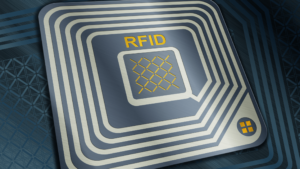
Each asset receives an RFID tag containing a unique identifier.
RFID readers capture this information automatically as tagged items pass within reading range.
The collected data is then processed through management software, allowing staff to monitor asset locations, movement history, and inventory status in real time.
Unlike manual inventory methods, RFID allows multiple tagged assets to be identified simultaneously.
Institutions comparing RFID vs barcode technologies can better understand which solution is most suitable for their asset tracking requirements.
For example, instead of scanning twenty laptops individually during an inventory audit, an RFID reader can identify all tagged devices within seconds.
This efficiency makes RFID asset management Kuwait increasingly valuable for educational institutions managing thousands of assets.
Core Components of an RFID Asset Management System
An RFID solution combines several technologies to create a complete asset tracking system.
1. RFID Tags
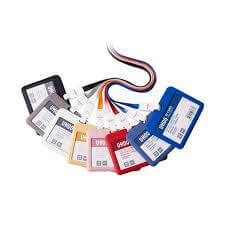
RFID Tags are attached to equipment, furniture, books, laboratory devices, and other valuable assets.
Each tag contains a unique electronic identifier linked to the institution’s inventory database.
Different tags are available depending on the asset type and environment.
For example, durable RFID tags may be used for laboratory equipment, while compact labels are suitable for library books.
Selecting the right tag helps ensure reliable performance throughout the asset’s lifecycle.
2. RFID Readers
RFID Readers detect tagged assets and transfer data to the inventory system.
Readers may be installed:
- At building entrances
- Library exits
- Storage rooms
- Laboratory doors
- Asset issue counters
Handheld RFID readers are also commonly used during inventory audits because they allow staff to locate equipment quickly across classrooms and departments.
For example, an IT administrator can complete a computer inventory across multiple classrooms without manually checking every serial number.
3. RFID Software
Software acts as the central management platform.
It stores asset information, tracks movement, generates reports, and supports inventory verification.
Institutions can monitor:
- Asset location
- Department ownership
- Maintenance schedules
- Loan history
- Inventory status
This visibility allows administrators to make better decisions regarding equipment usage and future purchases.
Benefits of RFID Asset Management for Schools and Universities
Educational institutions face unique operational challenges because assets are shared across multiple departments.
RFID technology helps simplify these processes.
1. Improved Asset Visibility
One of the biggest advantages is real-time visibility.
Instead of searching multiple classrooms for missing equipment, administrators can quickly determine its last recorded location.
For example, if a projector is moved from one lecture hall to another, the RFID system updates its location automatically when detected by readers.
This reduces time spent searching for shared resources.
2. Faster Inventory Audits
Traditional inventory checks often require staff to inspect every item manually.
This process can take several days in larger institutions.
RFID dramatically reduces audit time because multiple assets can be identified simultaneously.
An inventory officer carrying a handheld RFID reader can complete a classroom audit in minutes rather than hours.
This allows schools to perform inventory verification more frequently without disrupting normal operations.
3. Better Equipment Accountability
Educational institutions regularly lend equipment to teachers, students, and different departments.
Without proper tracking, accountability becomes difficult.
RFID systems record asset movement automatically.
Administrators can identify:
- Current asset location
- Department assignment
- Loan history
- Return status
This creates greater transparency while reducing equipment loss.
4. Lower Administrative Workload
Manual inventory systems often require repeated spreadsheet updates.
Staff may spend significant time recording asset transfers and verifying equipment locations.
RFID automates much of this work.
Instead of updating records manually, movement information is captured automatically through RFID readers.
This allows administrative staff to focus on more valuable operational tasks.
RFID Applications Across Educational Campuses
Different departments benefit from RFID in different ways.
1. School Asset Tracking
Primary and secondary schools manage growing inventories of digital learning equipment.
Interactive displays, tablets, science kits, and teaching resources frequently move between classrooms.
A reliable school asset tracking system helps administrators monitor these resources throughout the academic year.
Instead of relying on manual asset registers, schools gain real-time visibility into equipment availability.
2. University Inventory Management
Universities operate across multiple faculties and buildings.
Departments often maintain specialised equipment that is shared among students, researchers, and academic staff.
Effective university inventory management becomes increasingly important as campuses expand.
For example, engineering faculties may manage hundreds of technical instruments distributed across different laboratories.
RFID allows administrators to locate these assets quickly while maintaining accurate inventory records.
3. RFID Equipment Tracking for Laboratories
Science laboratories contain valuable equipment that requires careful monitoring.
Items such as microscopes, testing instruments, and measuring devices frequently move between classrooms and research facilities.
Using RFID equipment tracking, institutions can monitor equipment movement while reducing the risk of loss or unauthorised transfers.
Maintenance schedules can also be linked to individual assets, helping laboratories maintain compliance and equipment reliability.
4. RFID Library Management
Libraries remain one of the most successful applications of RFID technology.
Traditional library management often requires books to be scanned individually during borrowing, returns, and stock verification.
With RFID library management, multiple books can be processed simultaneously.
Library staff spend less time on manual scanning while improving inventory accuracy.
Students also benefit from faster borrowing and return processes.
For example, during annual stock verification, librarians can identify misplaced books much faster using handheld RFID readers instead of checking every shelf manually.
5. Campus-Wide Asset Management with RFID
Educational institutions often manage assets across multiple buildings, departments, and campuses. As the number of classrooms, laboratories, and administrative offices grows, keeping track of equipment manually becomes increasingly difficult.
An RFID-based campus asset management system creates a centralised platform where administrators can monitor assets across the entire institution. Whether equipment is moved between classrooms, transferred to another department, or temporarily issued for an event, every movement can be recorded automatically.
For example, if a university shifts laptops from one computer lab to another for a semester, the RFID system updates the asset location without requiring manual record updates. This improves visibility while reducing administrative effort.
A centralised system also helps institutions prepare for annual audits, budget planning, and future equipment purchases by providing accurate inventory data.
Mobile Computers Improve Asset Verification
Large campuses often require inventory checks across multiple buildings.
Using mobile computers, inventory staff can verify assets while walking through classrooms, laboratories, and storage areas instead of returning repeatedly to a desktop computer.
Our mobile computer buying guide explains how handheld devices improve inventory management across large campuses.
These handheld devices provide immediate access to inventory records and allow staff to:
- Verify equipment details
- Update asset status
- Record maintenance activities
- Confirm department assignments
- Complete inventory audits in real time
For example, during an annual asset verification exercise, an inventory officer can complete multiple classroom inspections without carrying paperwork or manually entering data later.
This reduces duplication and improves overall inventory accuracy.
RFID Printers Support Efficient Asset Identification
Every RFID system begins with properly identified assets.
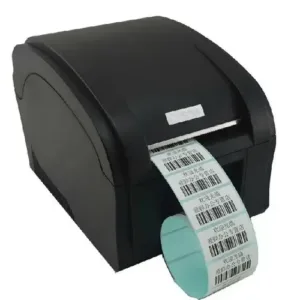
RFID Printers help educational institutions print and encode RFID labels for equipment, furniture, books, laboratory instruments, and other campus resources.
Understanding how RFID printers improve asset identification can help educational institutions build a more reliable inventory management system.
Unlike standard label printers, RFID printers both print the label and encode the RFID chip simultaneously. This ensures each asset receives a unique digital identity before entering the inventory system.
For example, when a university purchases a new batch of laptops, the IT department can print RFID labels and assign each device to the inventory database before distributing them to different faculties.
Using dedicated RFID printers also improves label consistency and reduces encoding errors.
Choosing the Right RFID Tags
Not every asset requires the same type of RFID tag. Educational institutions should select tags based on how assets are used and the environments in which they operate.
Choosing durable identification materials is equally important, and our barcode label guide explains which label options perform best in different environments.
For example:
- Library books typically use compact RFID labels.
- Laboratory equipment may require durable RFID tags.
- Outdoor equipment often benefits from weather-resistant tags.
- IT assets generally use tamper-evident RFID labels.
Choosing the right RFID tags improves reading performance while extending tag lifespan.
Institutions should also consider future expansion when selecting tag types to maintain consistency across departments.
Key Factors to Consider Before Implementing RFID
Successful RFID implementation requires planning beyond purchasing hardware. Avoiding common RFID implementation mistakes can help schools and universities achieve smoother deployment and better long-term results.
1. Identify High-Value Assets
Schools and universities should first determine which assets need continuous monitoring.
These may include:
- Computers
- Laboratory equipment
- Projectors
- Audio-visual systems
- Library collections
Starting with valuable assets allows institutions to demonstrate immediate operational benefits before expanding to other departments.
2. Review Campus Infrastructure
Building layouts influence RFID reader placement.
Libraries, laboratories, equipment storage rooms, and building entrances often require different reader configurations.
Conducting a site assessment before installation helps ensure reliable coverage and accurate asset detection.
3. Integrate with Existing Systems
Many educational institutions already use inventory management or ERP software.
RFID systems should integrate smoothly with these platforms to avoid duplicate records and manual data entry.
Proper integration improves reporting while simplifying day-to-day asset management.
4. Train Staff
Technology delivers the best results when users understand how to operate it correctly.
Training should cover:
- RFID reader usage
- Asset registration
- Inventory verification
- Reporting procedures
- Basic troubleshooting
Well-trained staff help maximise the return on RFID investments.
Cost Considerations for Educational Institutions
One of the first questions administrators ask is whether RFID is affordable.
Implementation costs vary depending on:
- Campus size
- Number of assets
- RFID reader quantity
- RFID tag requirements
- Software functionality
- System integration
Understanding the RFID system cost can help educational institutions plan budgets and choose a solution that aligns with their operational needs.
Smaller schools may begin with a limited deployment covering computer laboratories or libraries.
Larger universities often implement RFID in phases, expanding from one department to another over time.
This phased approach helps institutions spread investment while gaining experience with the system.
Instead of focusing only on initial costs, administrators should also evaluate long-term savings through reduced asset losses, faster audits, and lower administrative workload.
Why RFID Is Becoming the Future of Educational Asset Management
Educational institutions continue investing in digital infrastructure, smart classrooms, and connected campuses.
As the number of shared assets grows, manual inventory systems become increasingly difficult to manage.
RFID provides a scalable solution that supports:
- Real-time asset visibility
- Automated inventory verification
- Better equipment accountability
- Faster reporting
- Reduced administrative workload
Many institutions also combine RFID with cloud-based inventory software, allowing administrators to monitor assets from multiple campuses through a single platform.
This flexibility makes RFID an important part of long-term campus technology planning.
Conclusion
Implementing RFID asset management Kuwait solutions helps schools and universities gain better control over valuable assets while reducing manual inventory work. From tracking classroom equipment and laboratory devices to improving library operations and campus-wide inventory visibility, RFID supports faster audits, greater accountability, and more efficient resource management. By choosing the right RFID tags, readers, printers, and software, educational institutions can build a scalable asset management system that supports both current needs and future growth.
FAQs
How does RFID asset management help schools and universities?
RFID asset management Kuwait helps educational institutions track equipment, books, and other assets more accurately while reducing manual inventory work and improving accountability.
Can RFID be used for university library management?
Yes. RFID simplifies book borrowing, returns, shelf management, and stock verification, making library operations faster and more efficient.
Which assets can be tracked using RFID?
Schools and universities can track laptops, laboratory equipment, projectors, library books, furniture, sports equipment, and other valuable campus assets.
Are RFID systems suitable for small schools?
Yes. Many schools begin with a limited RFID deployment for libraries or IT equipment and expand the system as operational requirements grow.
What hardware is required for an RFID asset management system?
A complete RFID system typically includes RFID tags, RFID readers, RFID printers, inventory management software, and mobile computers for real-time asset tracking and verification.


 by
by